A note about these journal entries
This web journal contains press, radio interviews, audience feedback and a whole host of other entries that describe the process I have been through during this project.
The Journal is in reverse order, so if you want to follow the timeline from the start, scroll to the bottom and work your way up.
Alternatively, you could work your way back in time.
Some rough notes made while looking after the exhibition
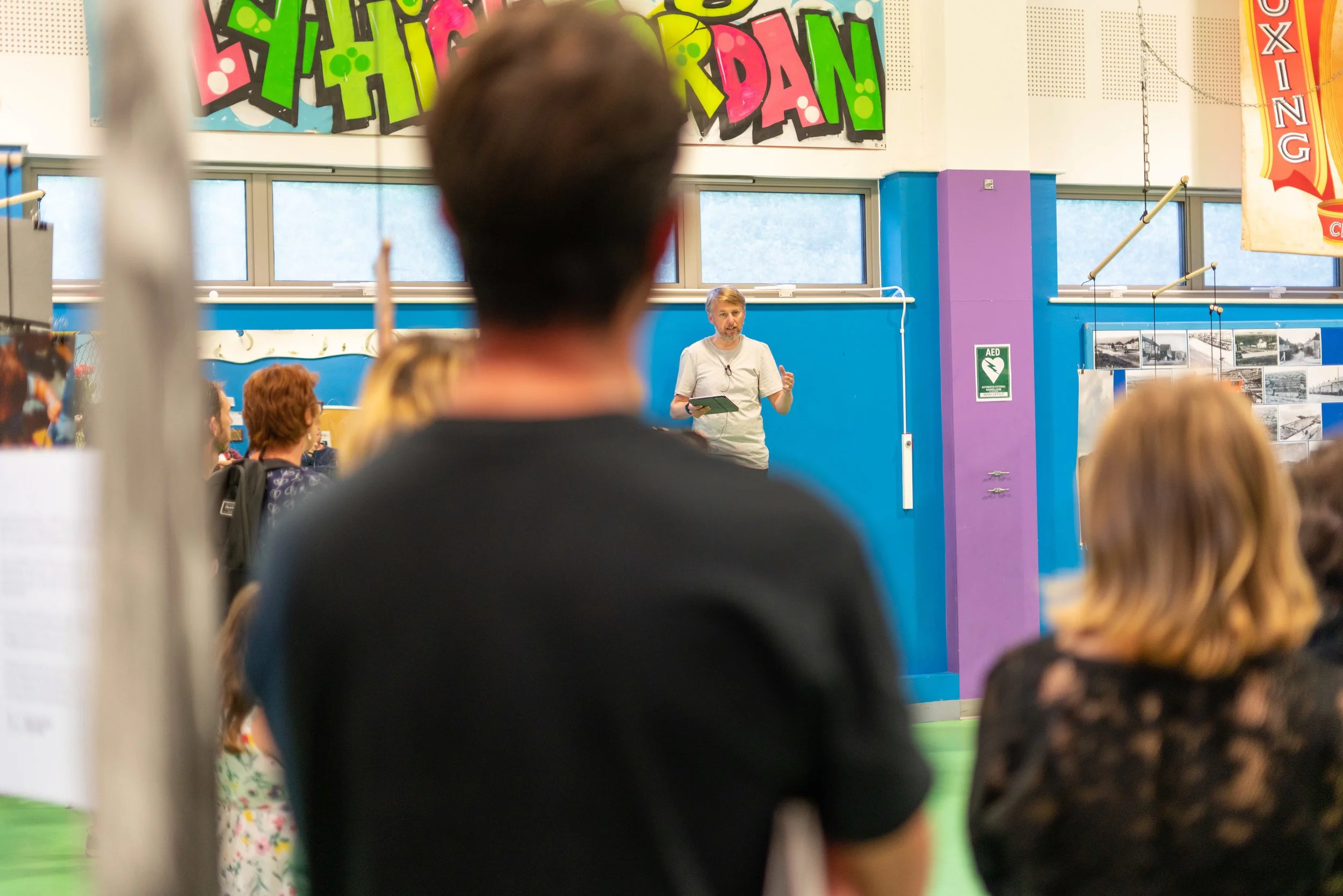
I’ve been at the exhibition all week and these are my observations.
Peoples response to the work
I've had lots of conversations with people. Themes that had come up include:
There are so many good things happening here in Whitehawk.
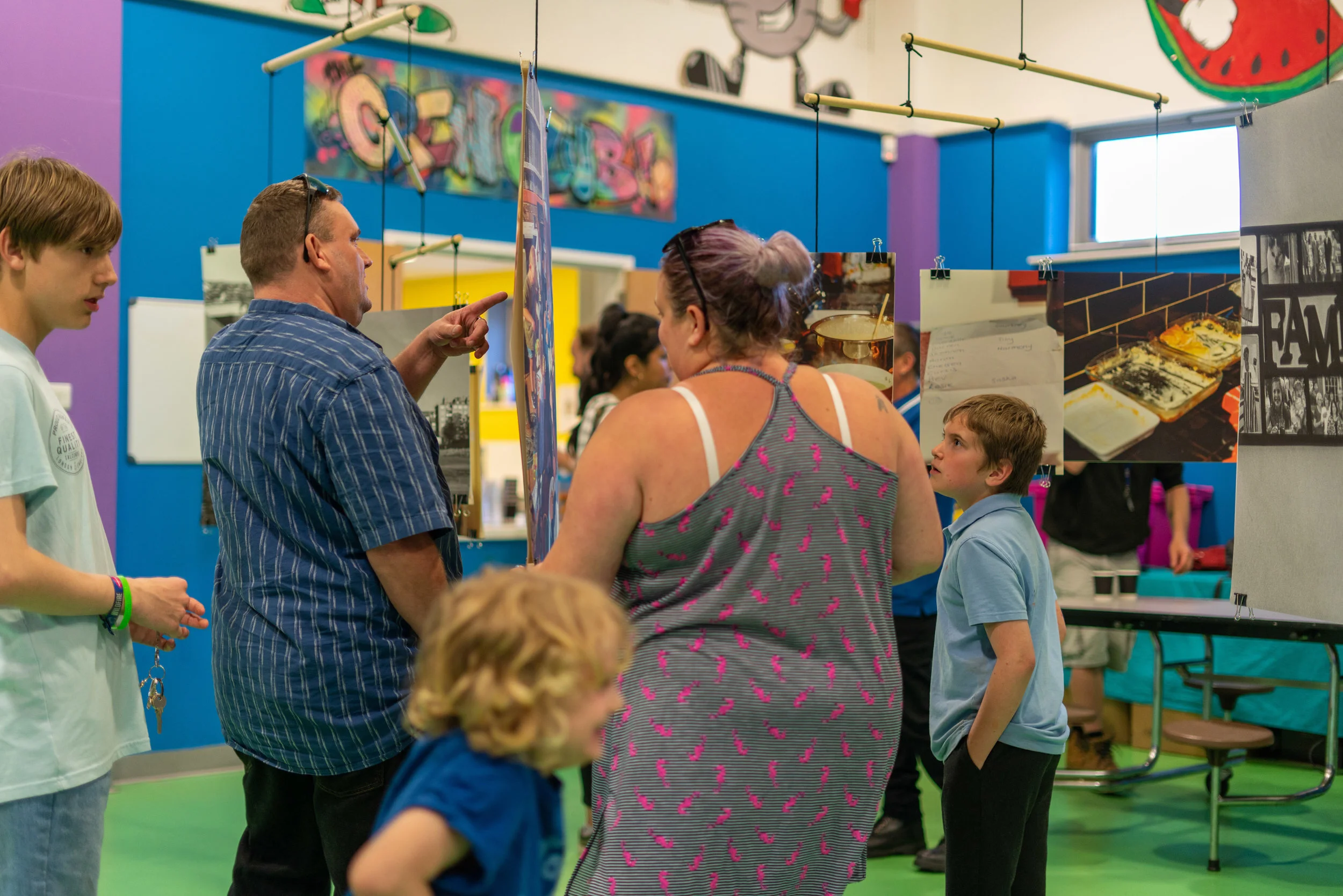
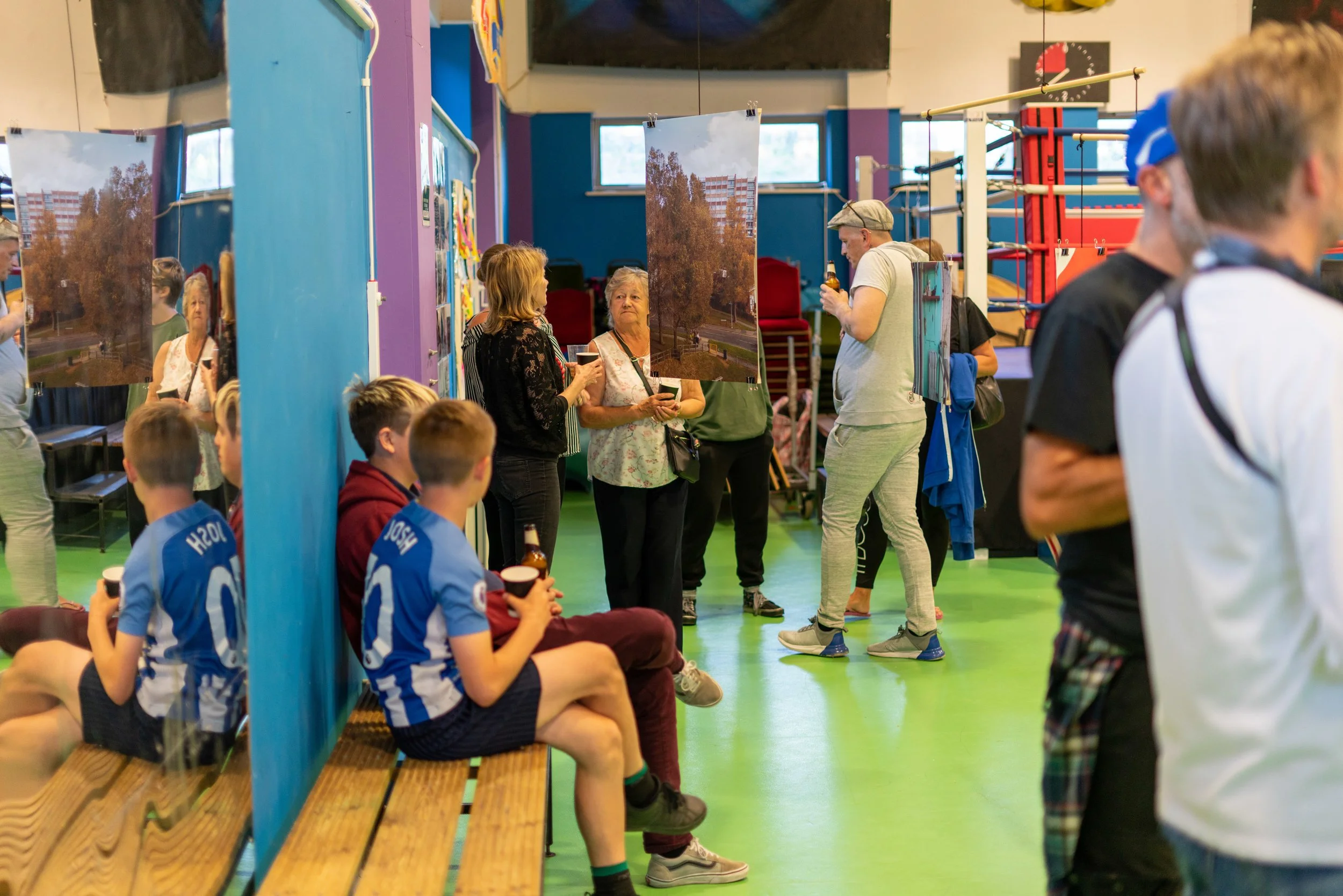
Delight that this is happening here. A youth club has been turned into a gallery.
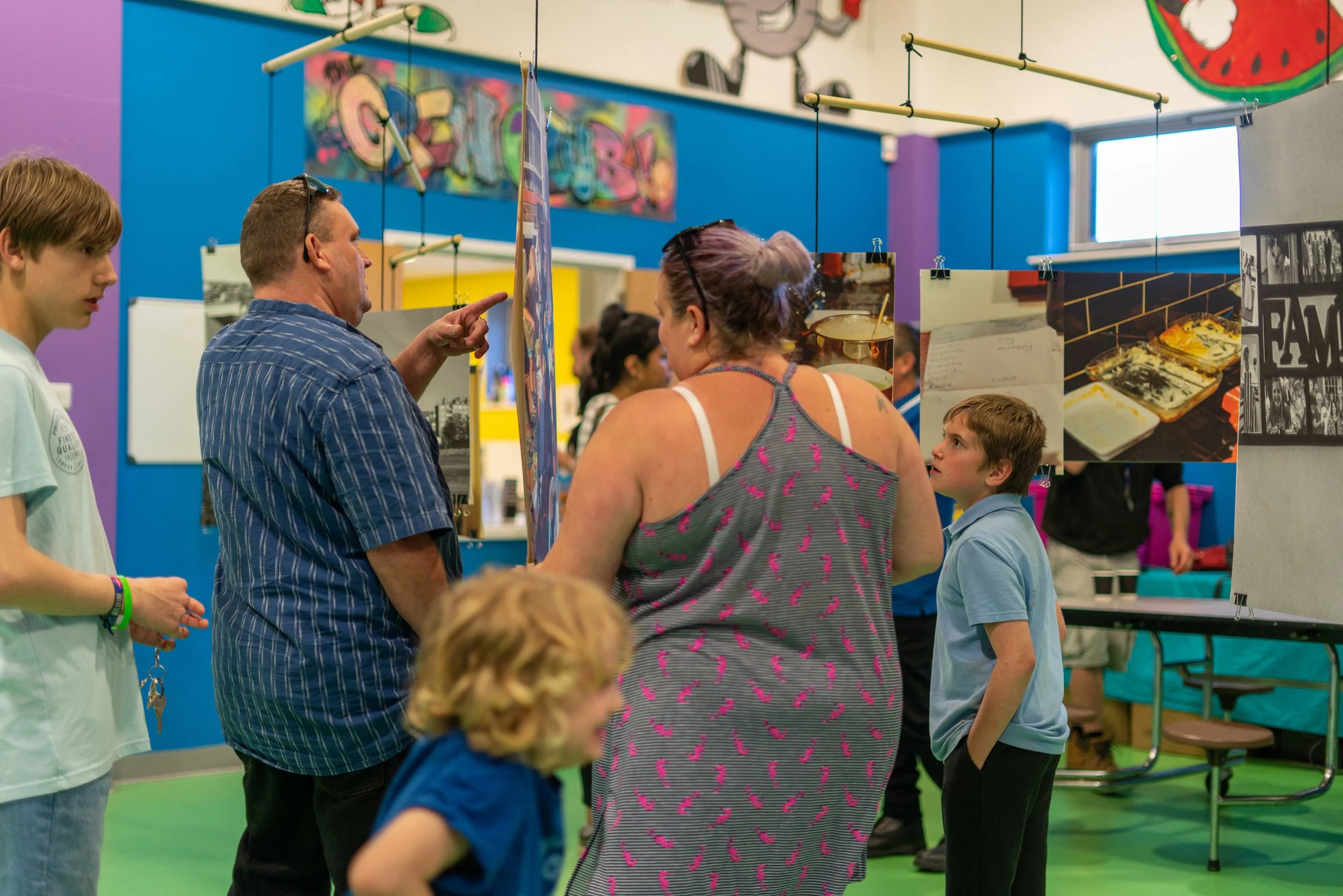
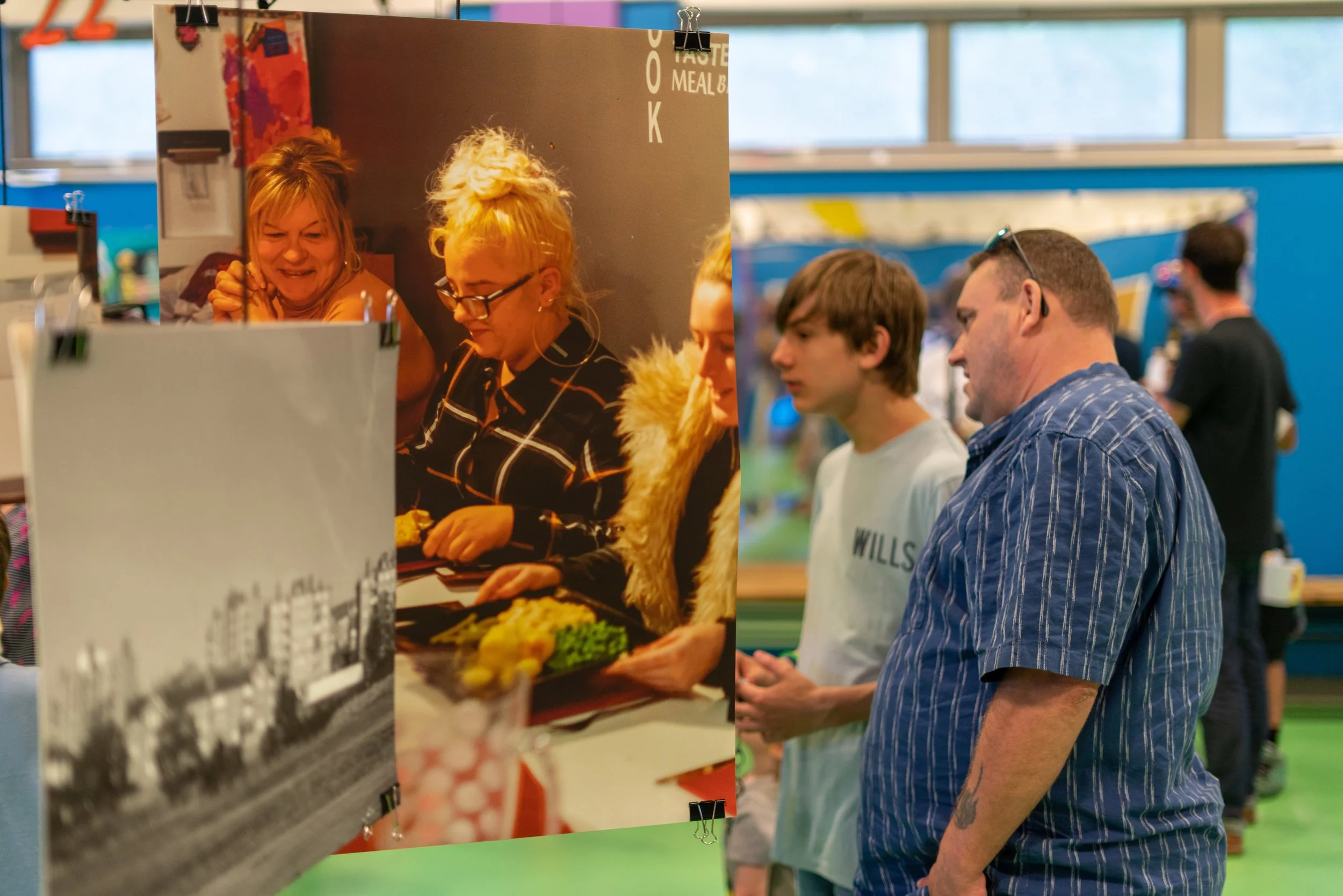
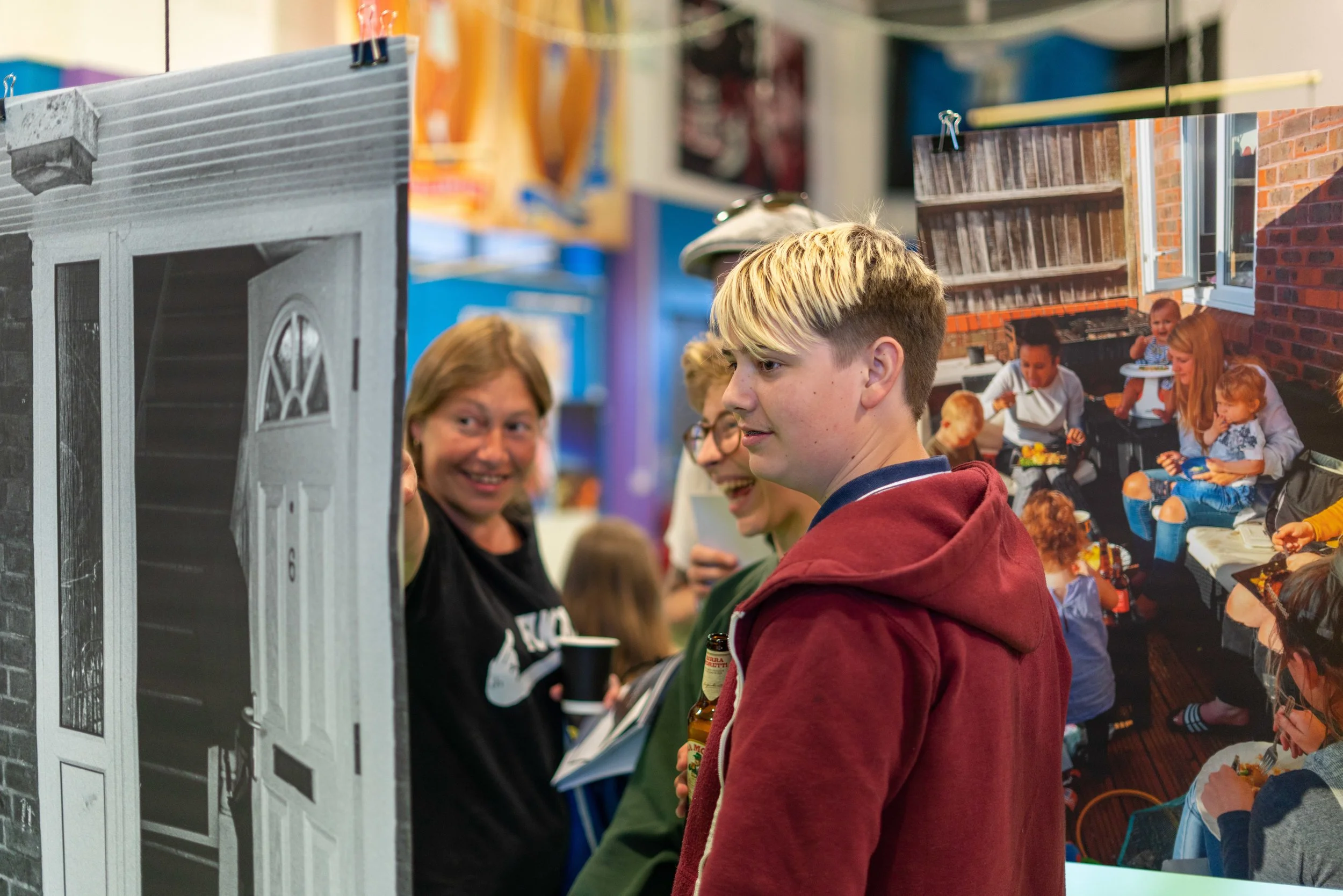
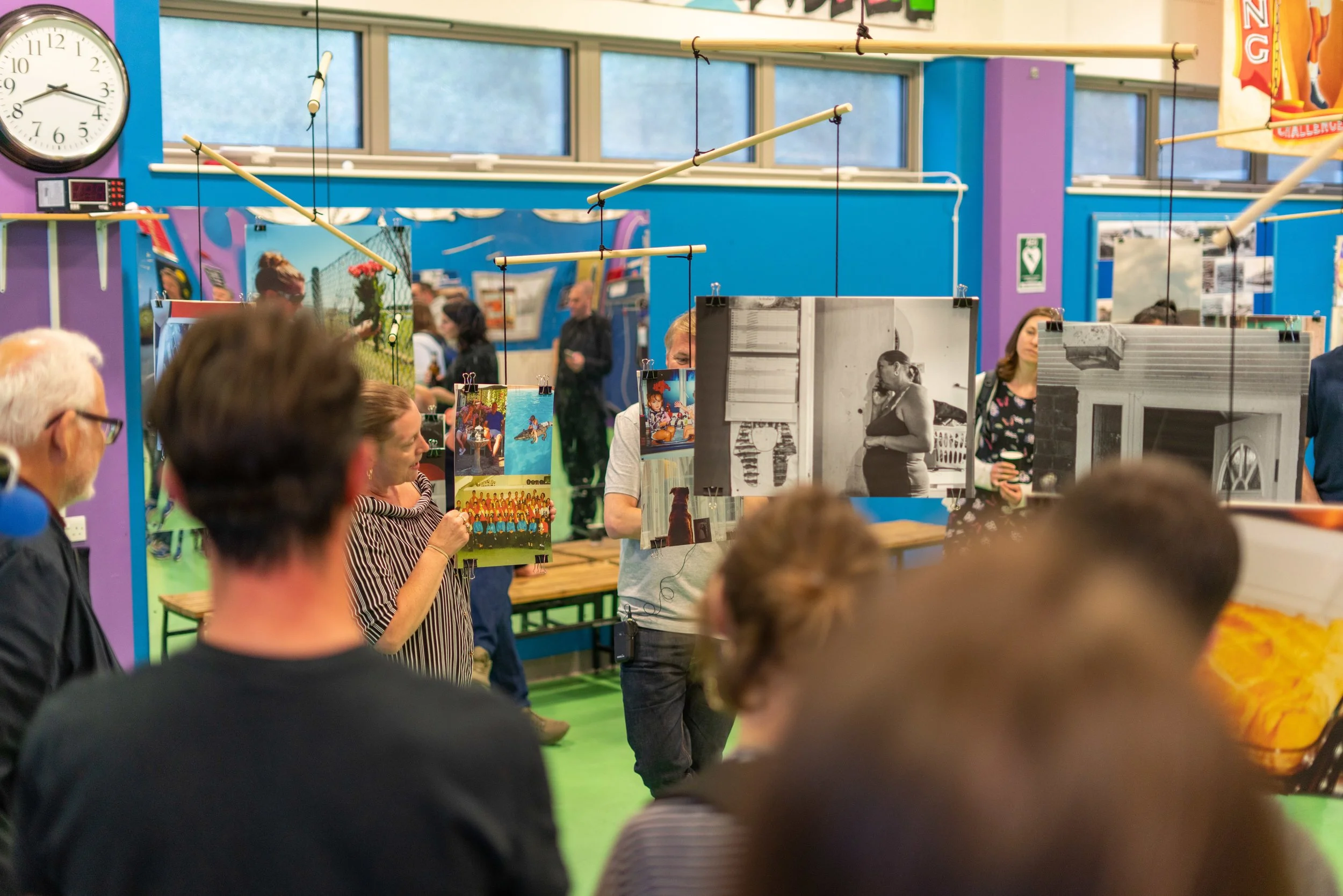
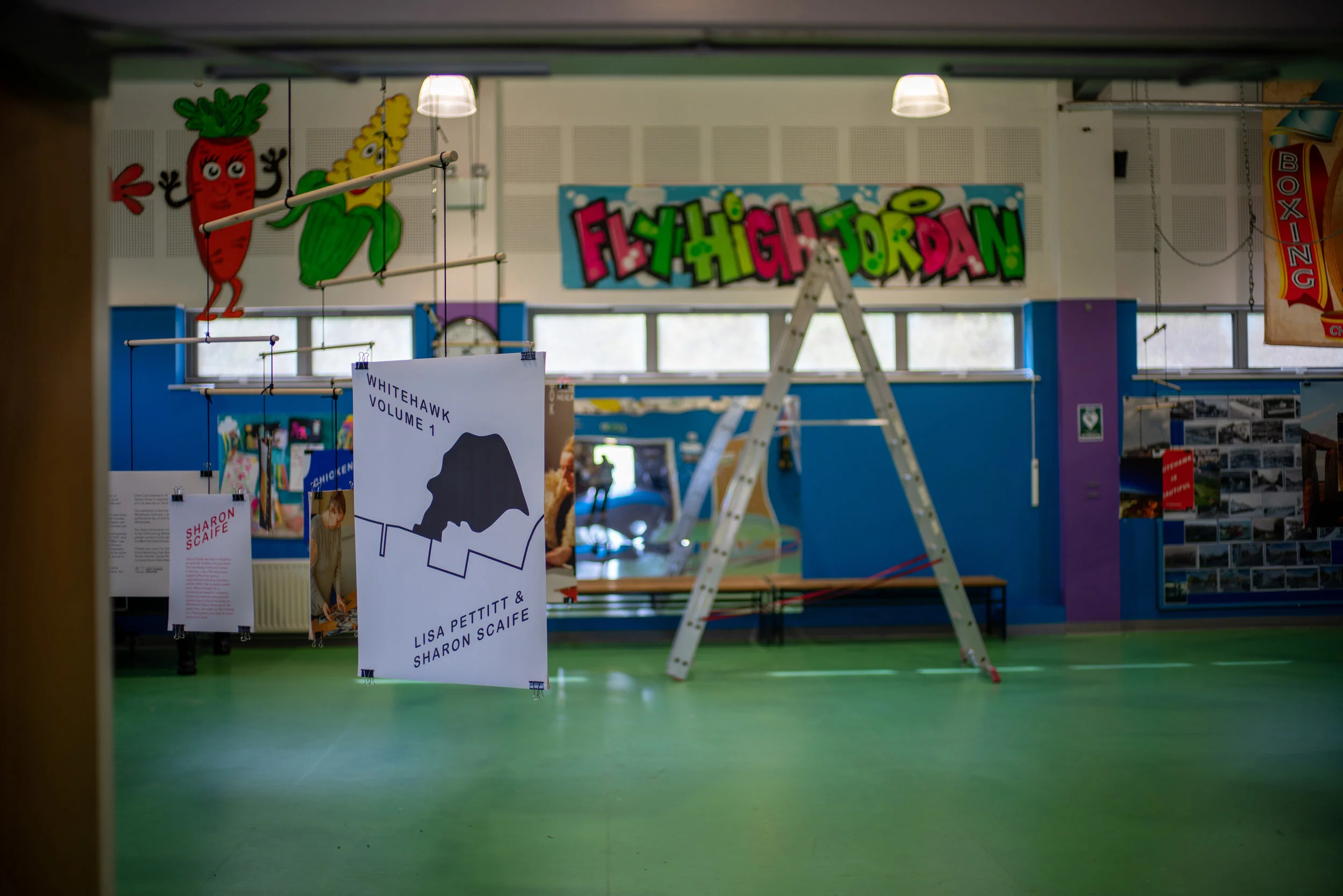
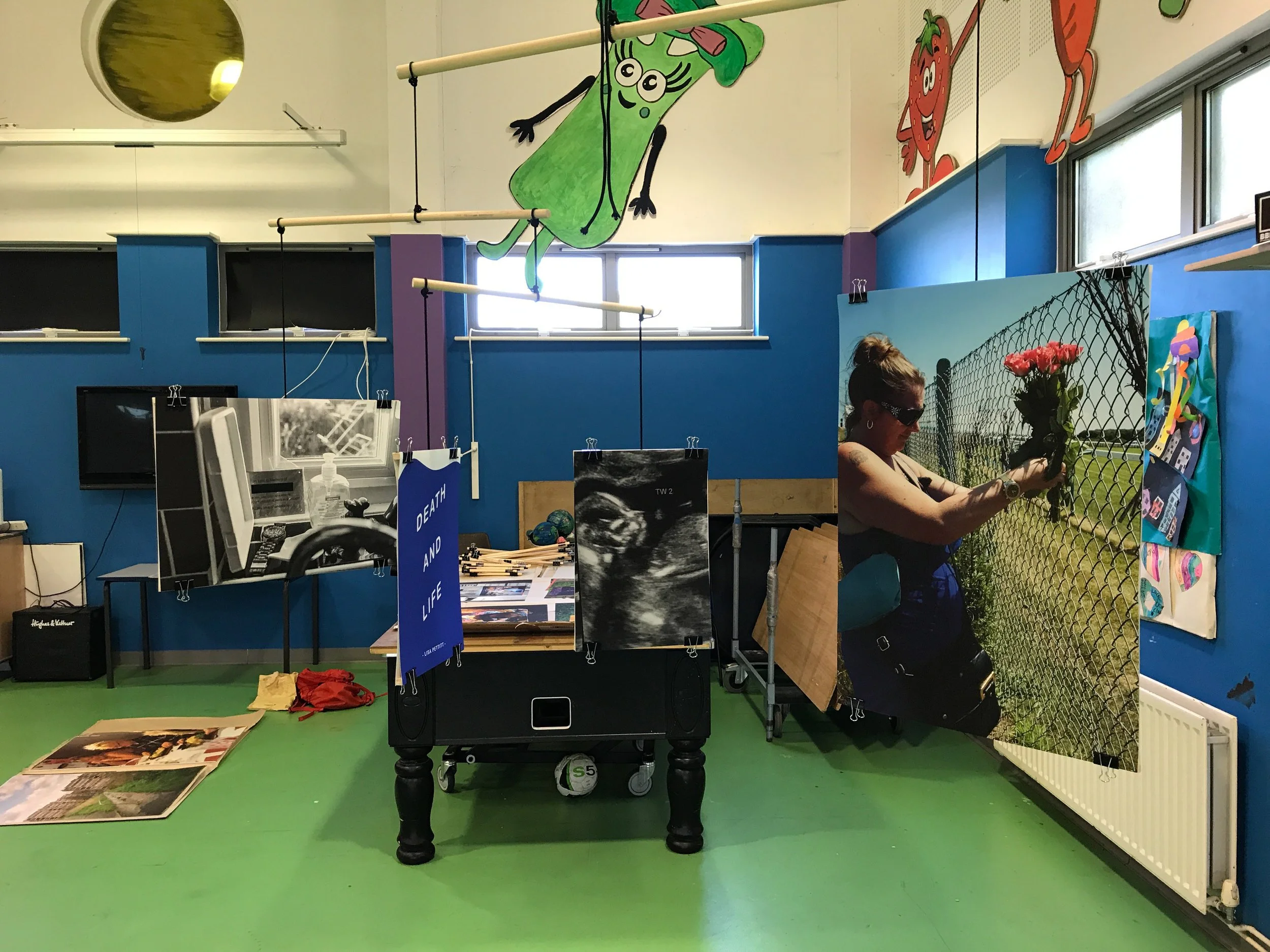
Surprise when walking in the door, about the way the work has been hung
Lots of conversations about the perception of Whitehawk.
Outsiders talk about the myth-the things they have heard about the area. Most don't have first hand experience of the area.
Locals talk about this negative perception with a tone of resignation.
I've had a few Council officials in and most have been friendly. I think this is the case for all the official services struggling to know what to do with Whitehawk. They all look at projects like this and think, ’how do we use this, how do we make this look like part of our work’.
So perception is a big theme.
I’m interested in how that perception effects everything including how support/art/culture is delivered here.
What this project has shown is that local people can and want to do more.
It goes back to the comment I made at the City Culture Strategy day. Why is there barely anyone in the room from the outlying areas-and where is the roadmap to change that?
About the exhibition itself
What has worked?
The launch was brilliant, a good mix of people, but there could have been more locals.
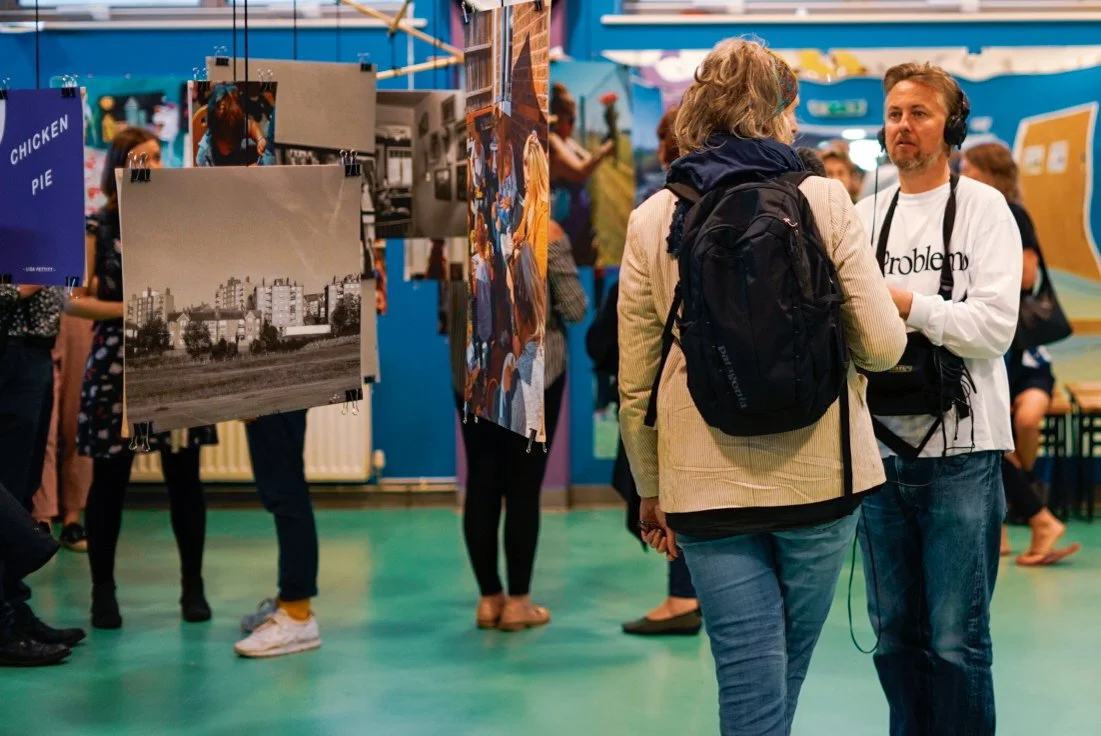
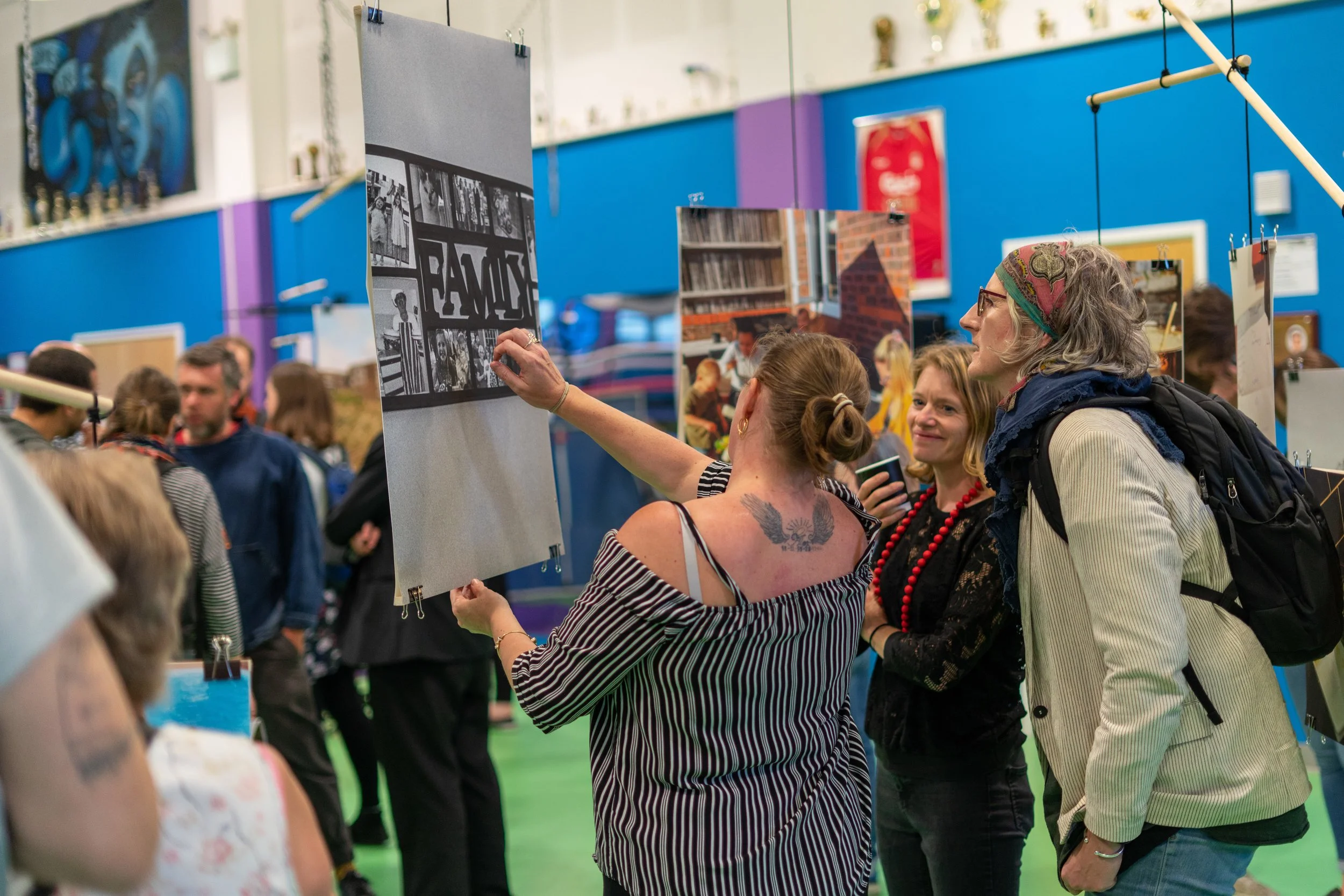
The hanging-visually it worked well - people could interact with it.
What could have been better?
I wish I'd created a way to capture something from visitors other than the audio recordings.
I wish we'd thought more about local people coming - but that is a work in progress that goes beyond this small project.
I wish I'd thought more about why people don’t come to these things- what barriers are there.
I wish I'd created some professional sessions where workers and interested parties could have taken part in workshops and heard more about the process.
I wish I'd got schools involved.
Next steps
WV two-what is it?
What happens with Vol 1
online
Books
Manual + book
evaluation
writing-blog post
Exhibition Book
Design: Emily Macaulay
Produced for the exhibition and given away to visitors.

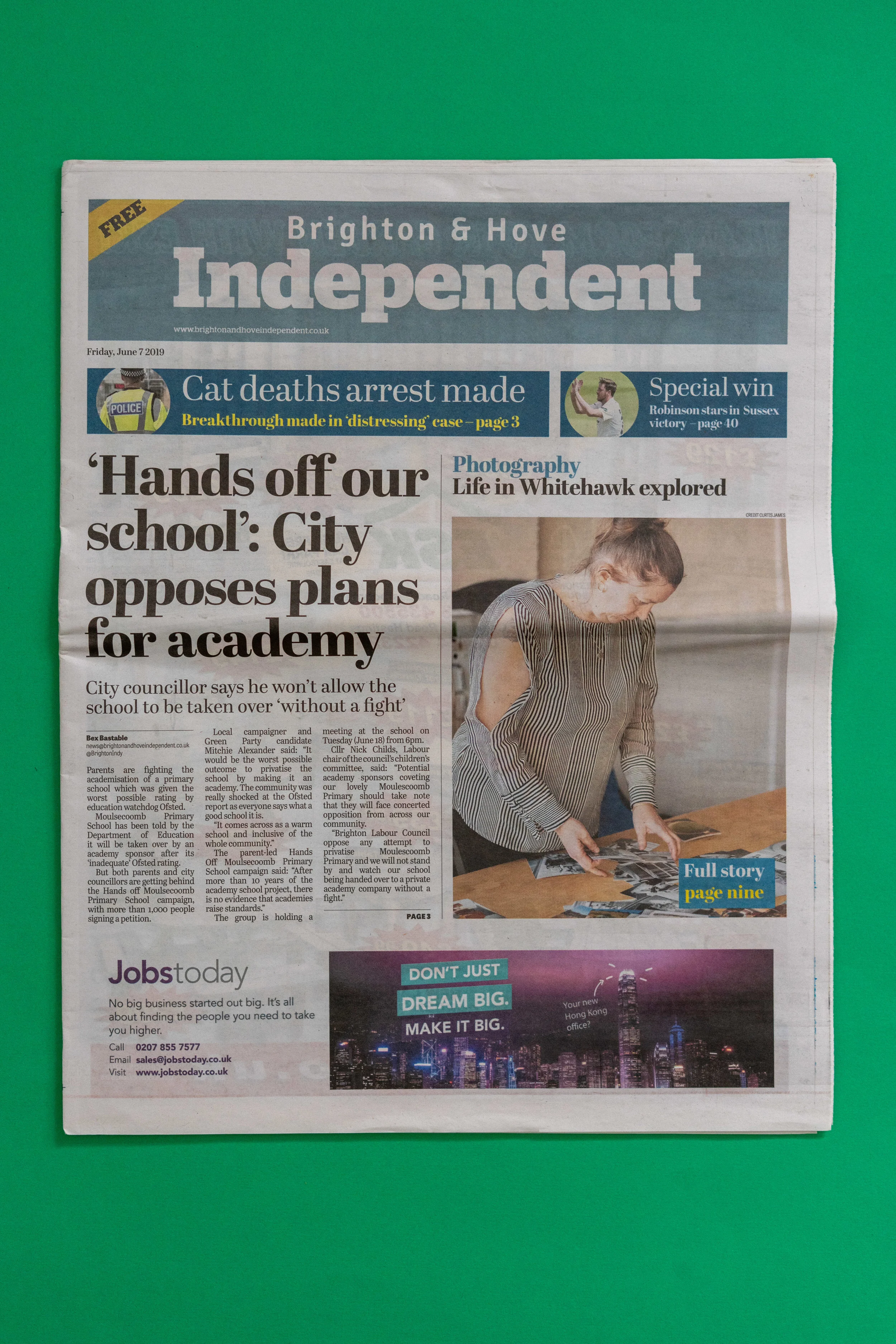

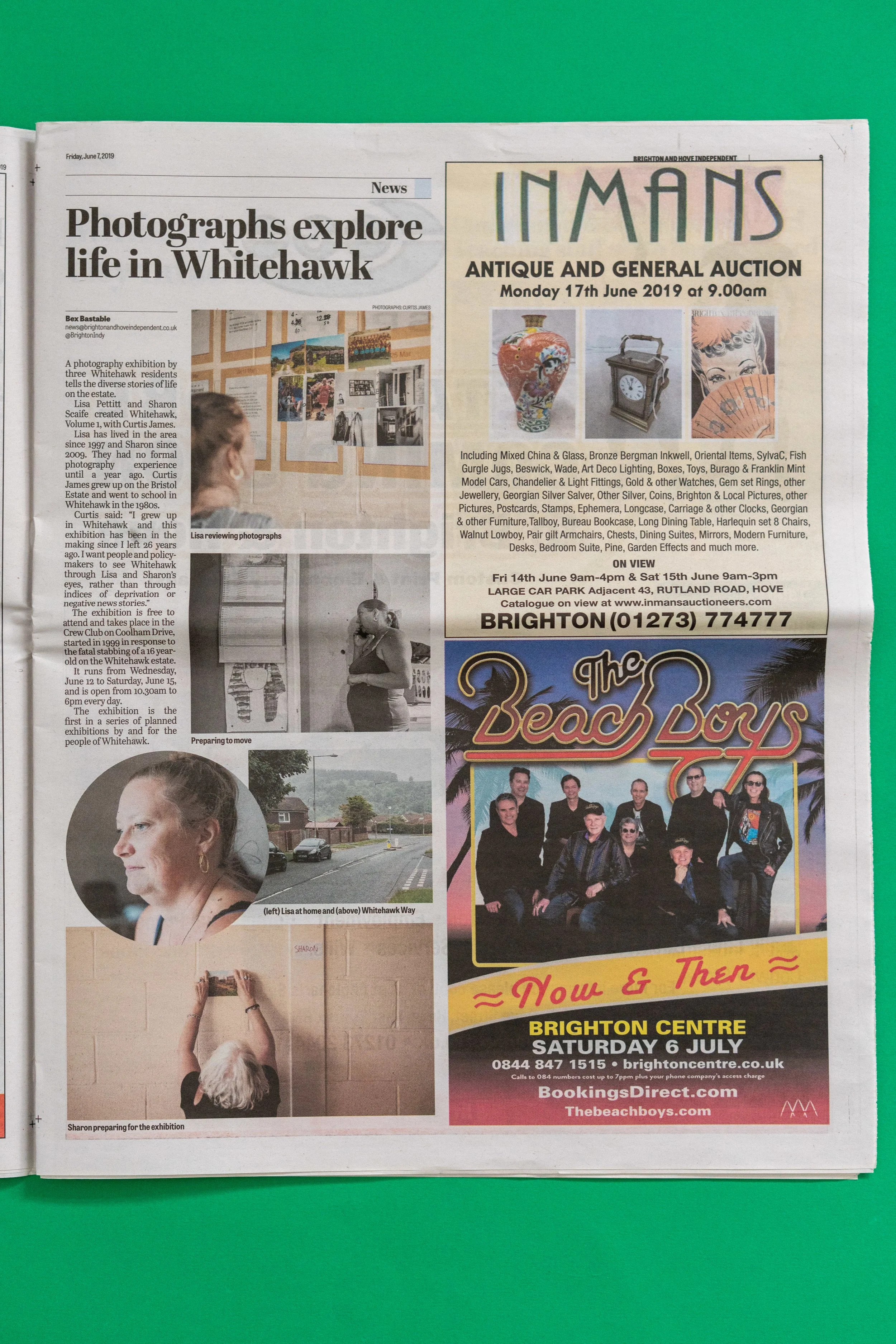
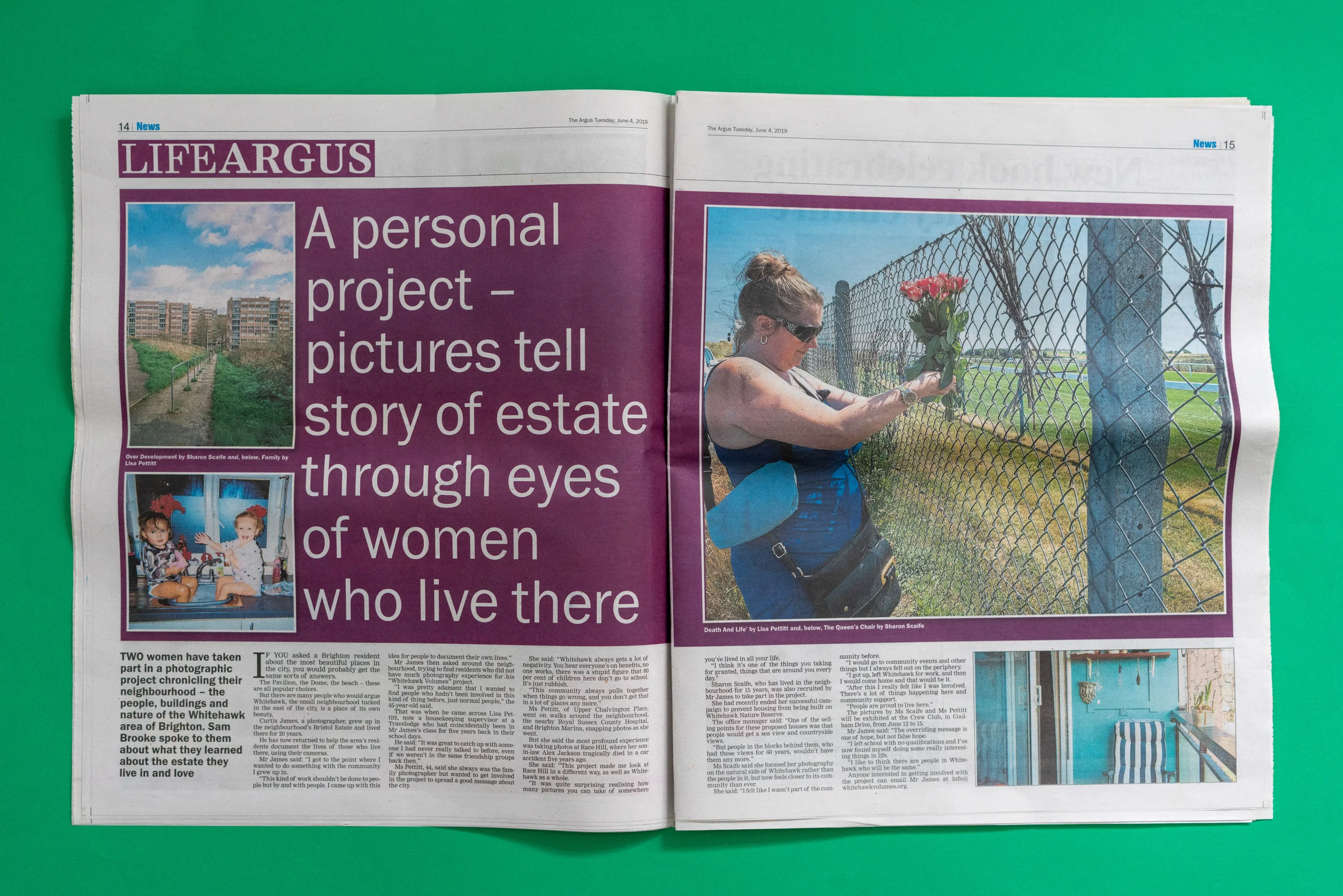
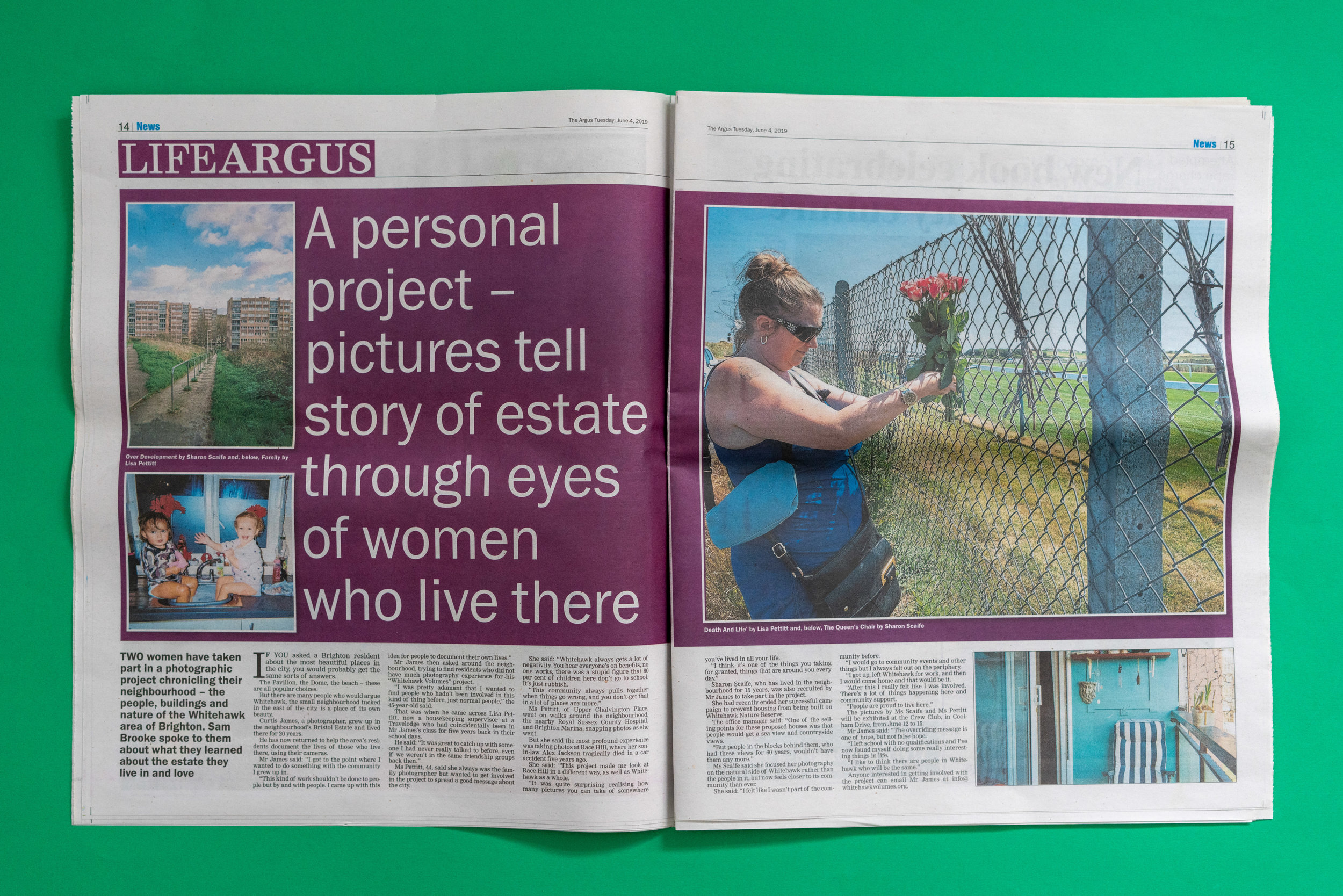
Press: Radio Interviews with participants on BBC Radio Sussex and Surrey
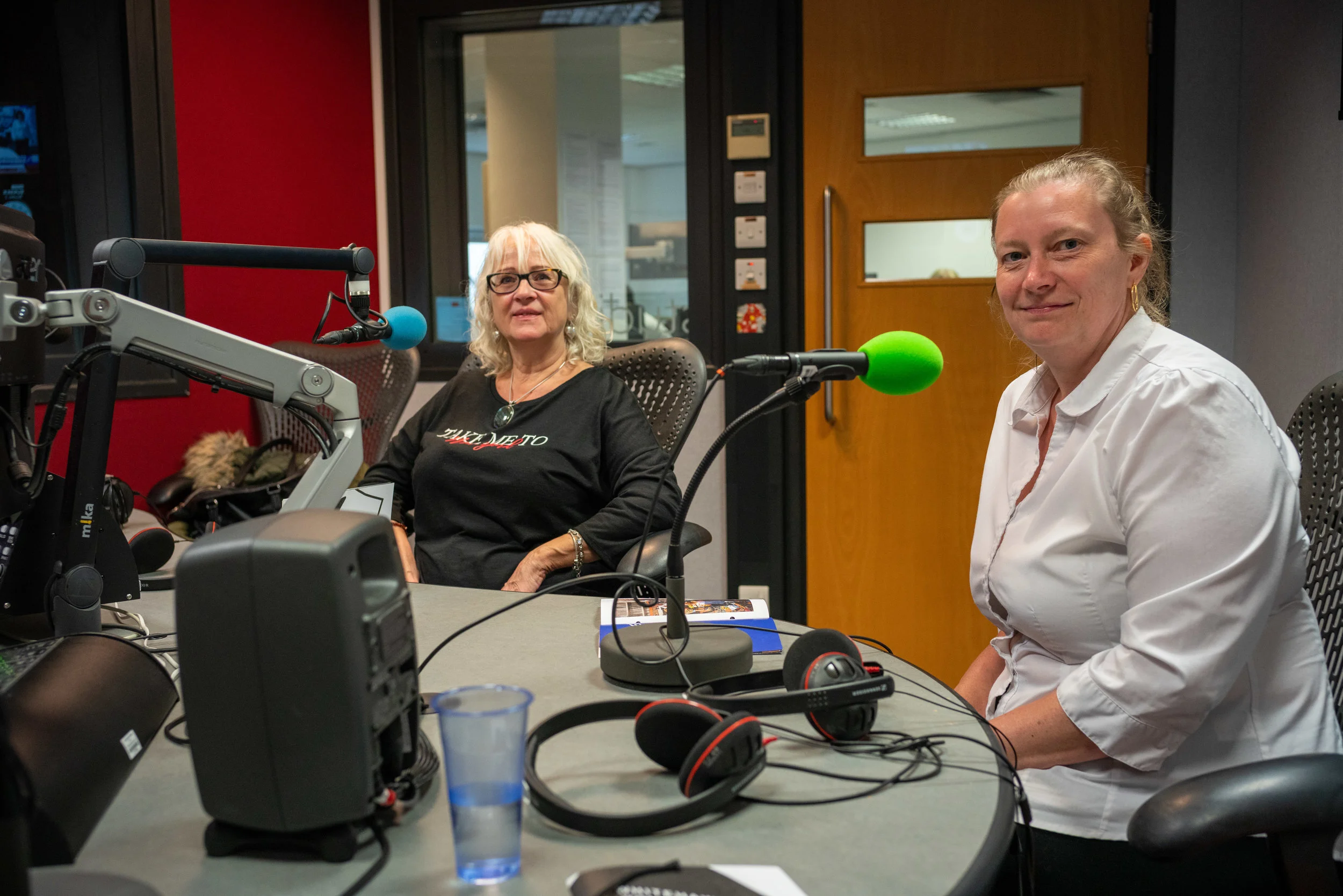
Broadcast and recorded on the 10th June on BBC Radio Sussex with Danny Pike.
Process: Bringing the work together to share
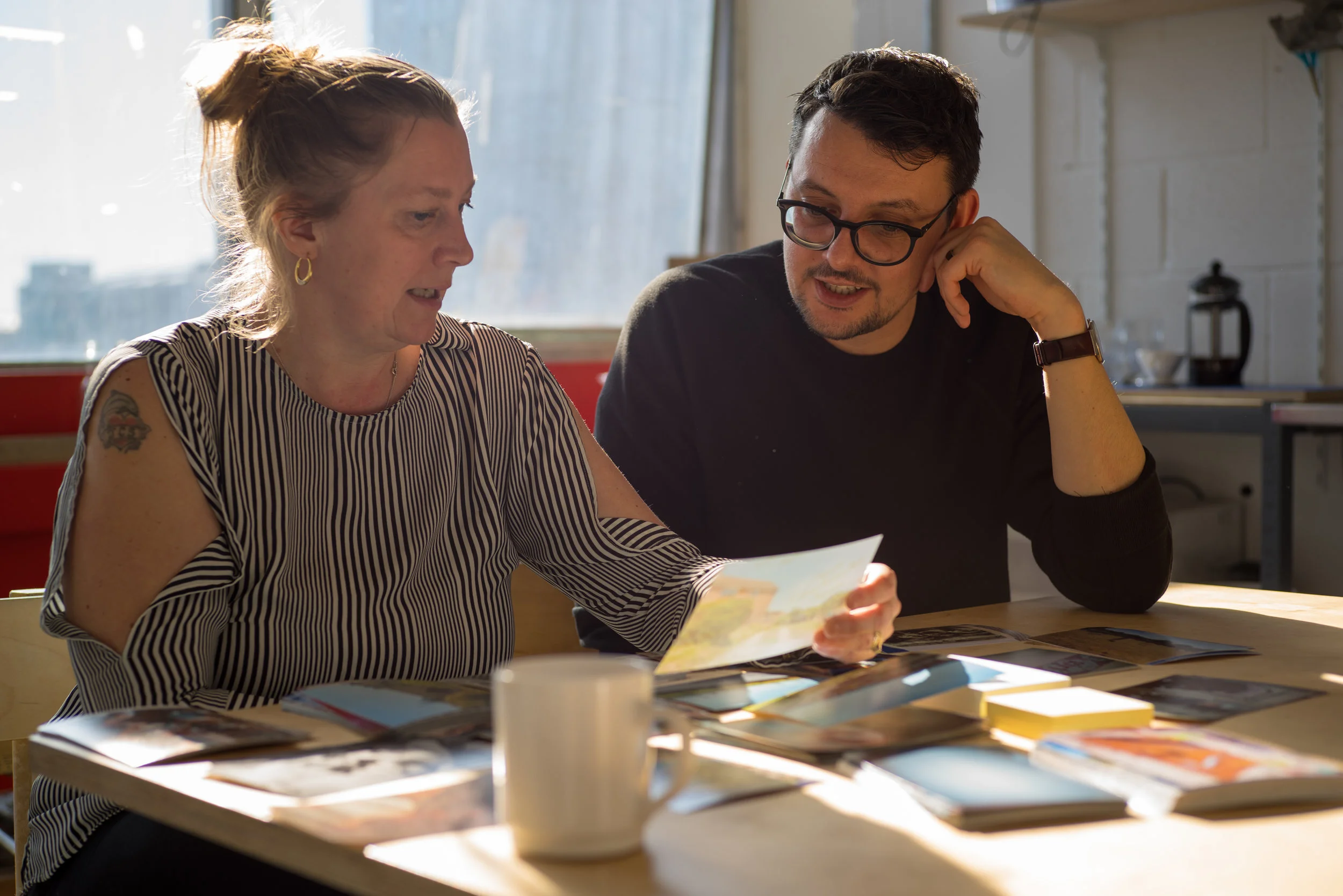
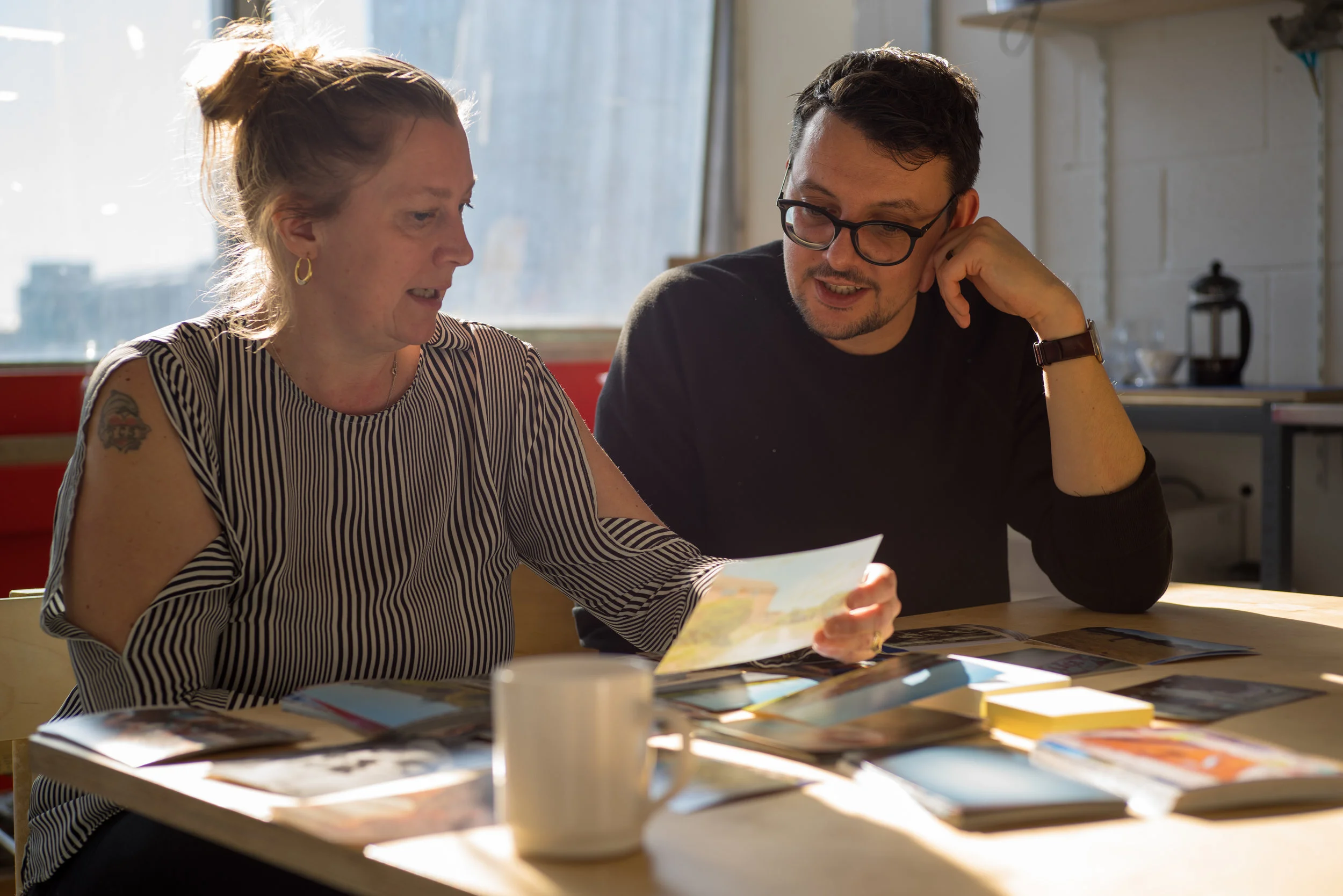
Along with anthropologist Dr Simon Newitt and Grant Phillips, we spent the day with two of the participants looking through their ethnographic collections. Between them, they’ve spent the last 8 months taking photographs and documenting aspects of their lives for this project.
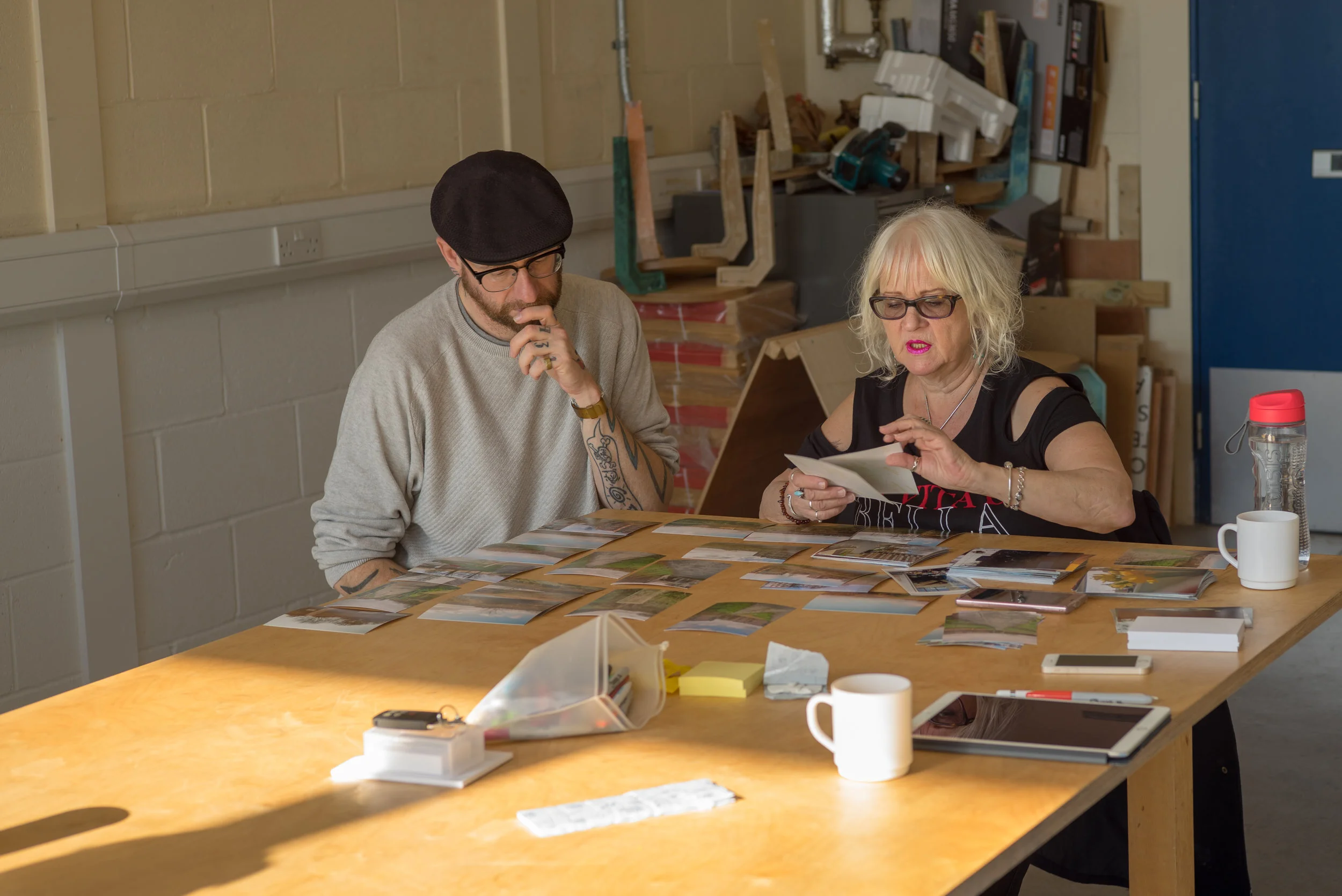
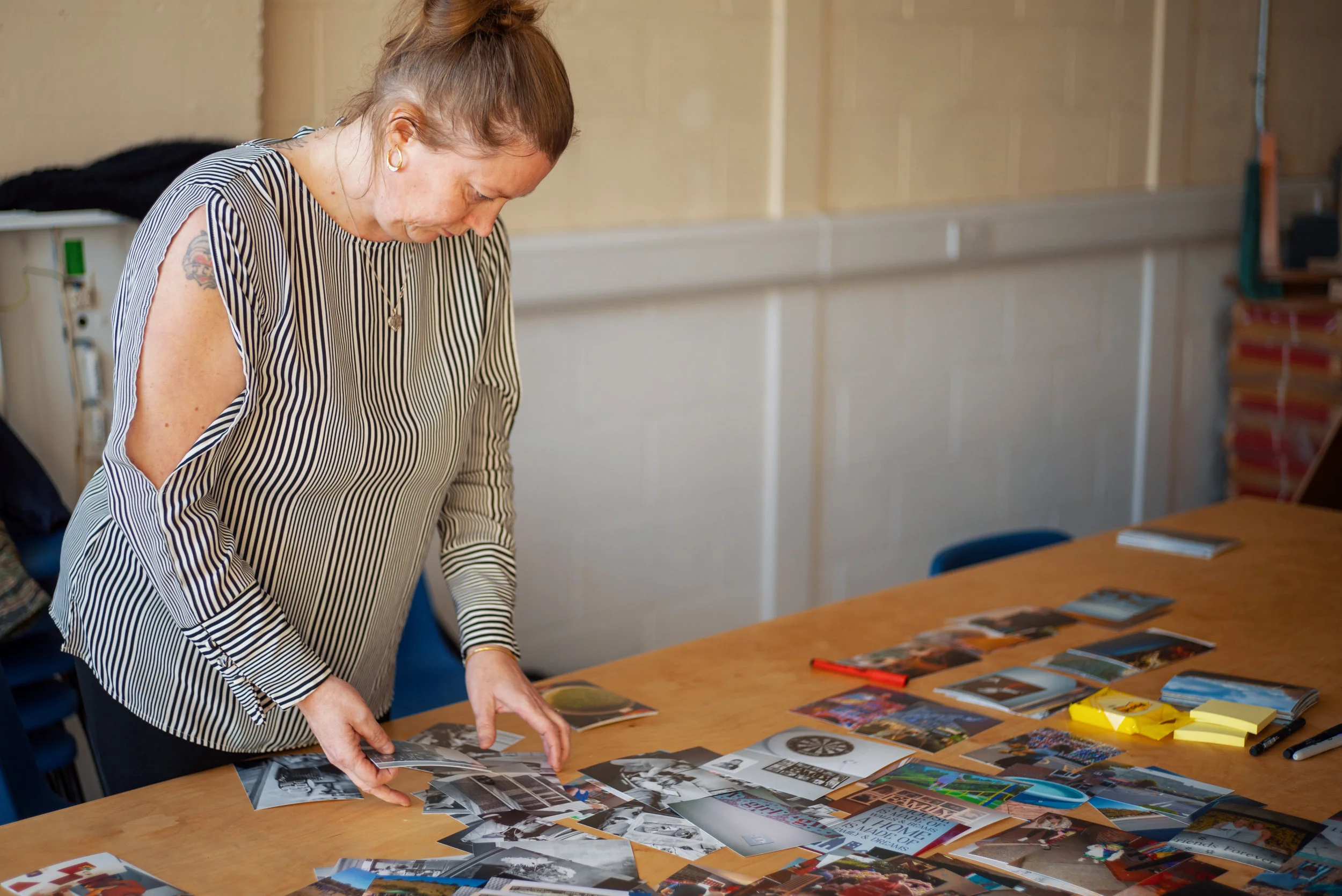
This day was about enquiry rather than analysis. It was about reflecting on the photographs and the stories they related to. By the end of the day we had two full walls of photographs, words and quotes which will lead onto the next part of the project, sharing.
Process: Speaking about the project at a symposium about arts and health
I had the pleasure of speaking at Daniel Regans Social Works Arts and Health get together a few months ago. I shared some stories about some of the projects that have been keeping me busy over the past few years, but my main focus was on this project. Luckily, Katharine Lazenby was on hand to document the day, so I thought I’d share some of what she wrote. I think she sums it up very well.
Read the full post here.
Process: Learning from another project
In September 2017 I was commissioned to document the lives of people involved at two community businesses in Brighton and Hove. The project arrived just as I started work on this one, and it was good timing because it reminded me of some important lessons.
Read the full post here.
Process: Walking Interview with participant
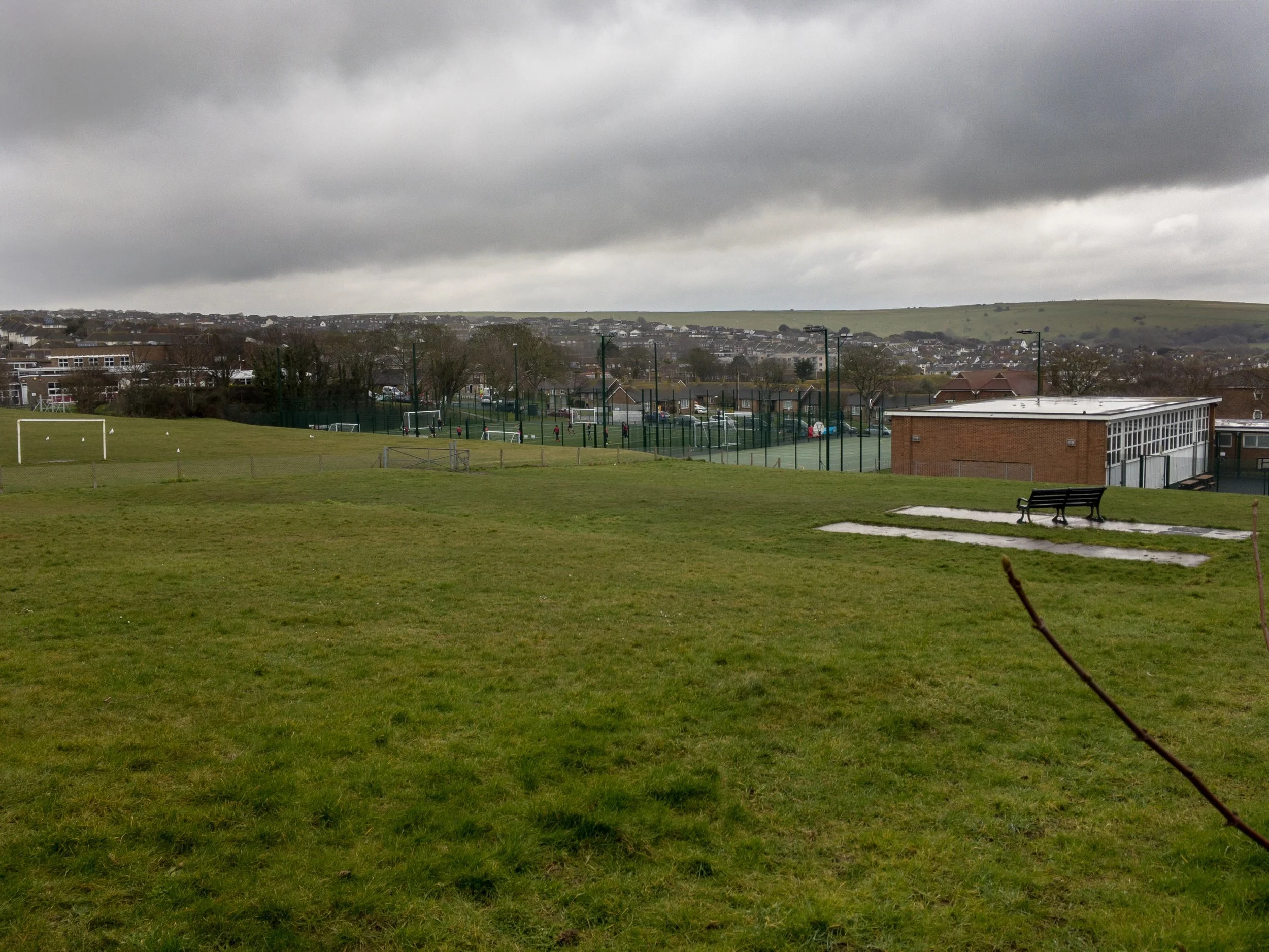
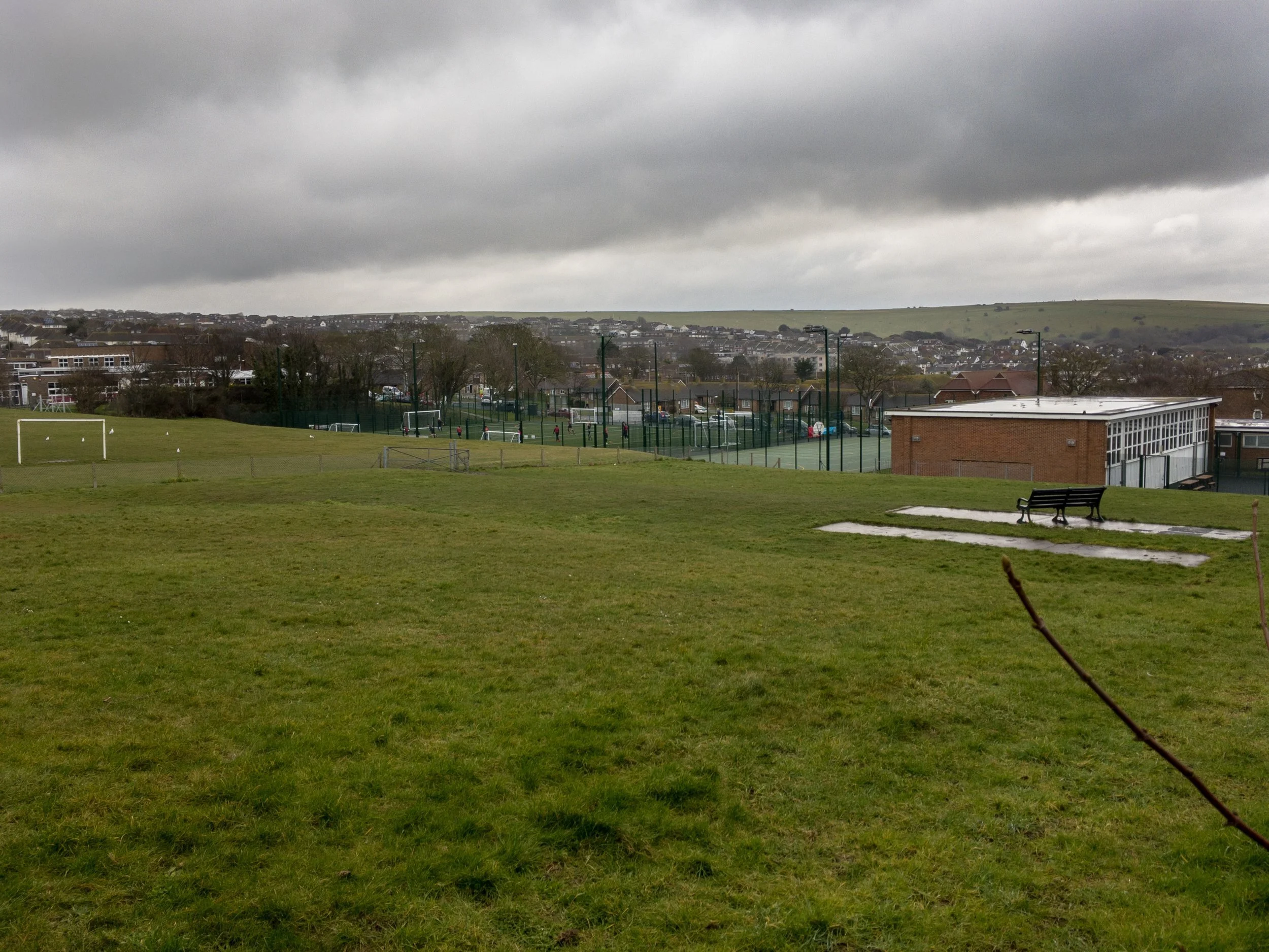
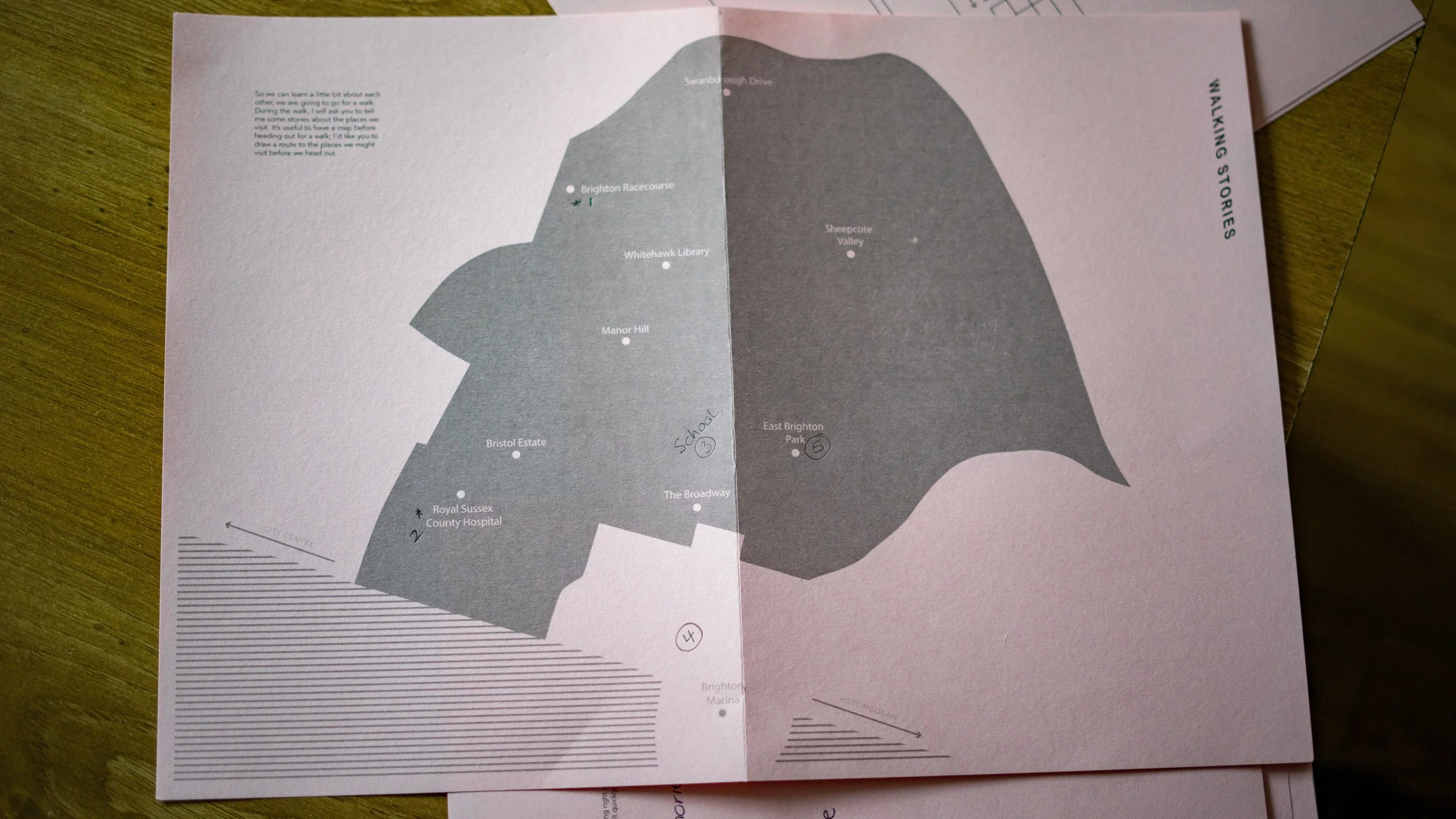
This was the second session with Tanya. We'd already walked around the area she lived and worked, and today we went slightly further afield. I have decided to let the walk guide the interview rather than arrive with a bunch of pre-planned questions. I'm looking forward to listening back to the stories, and starting phase two, which will be setting up Tanya with a camera to document her life for a week.
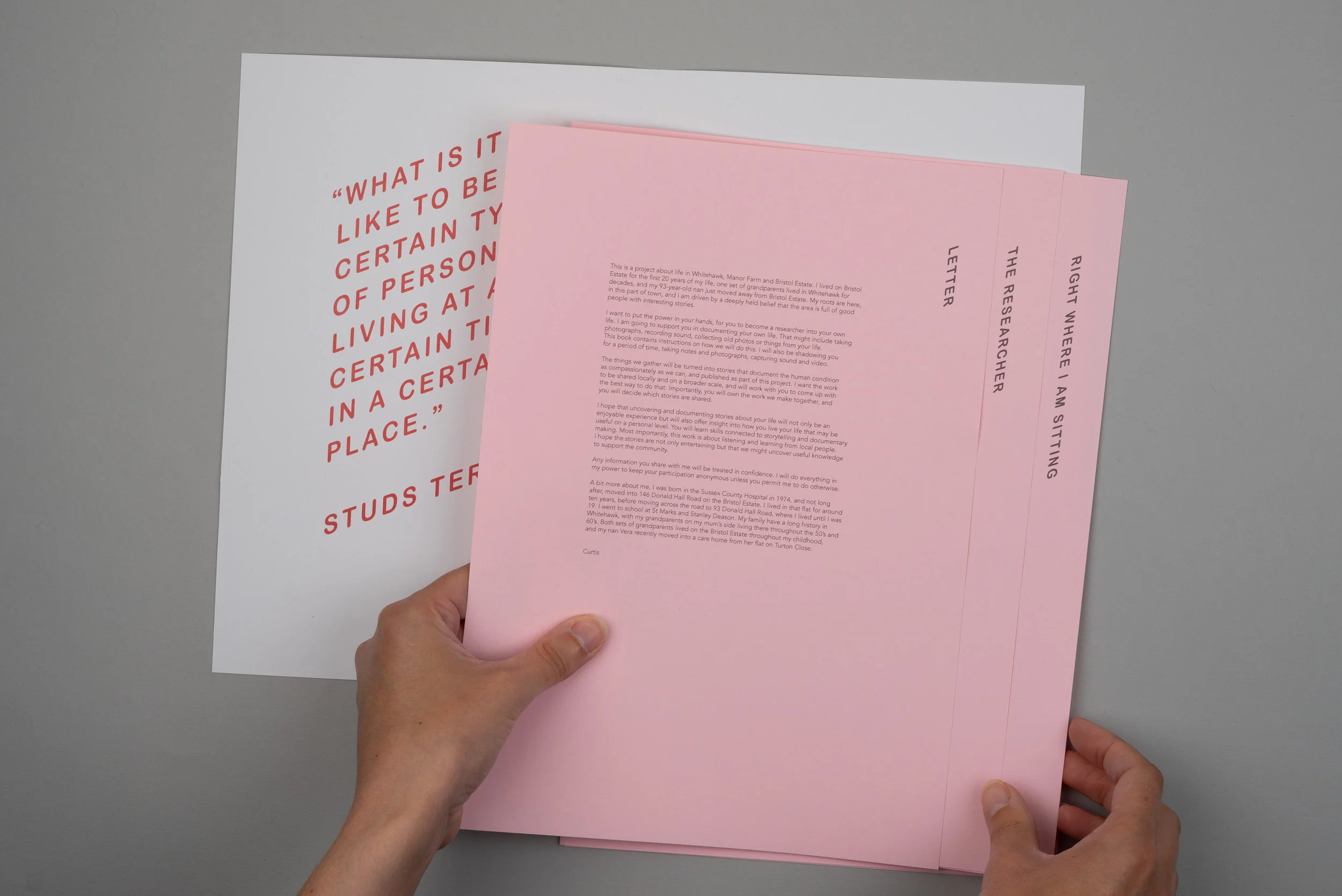
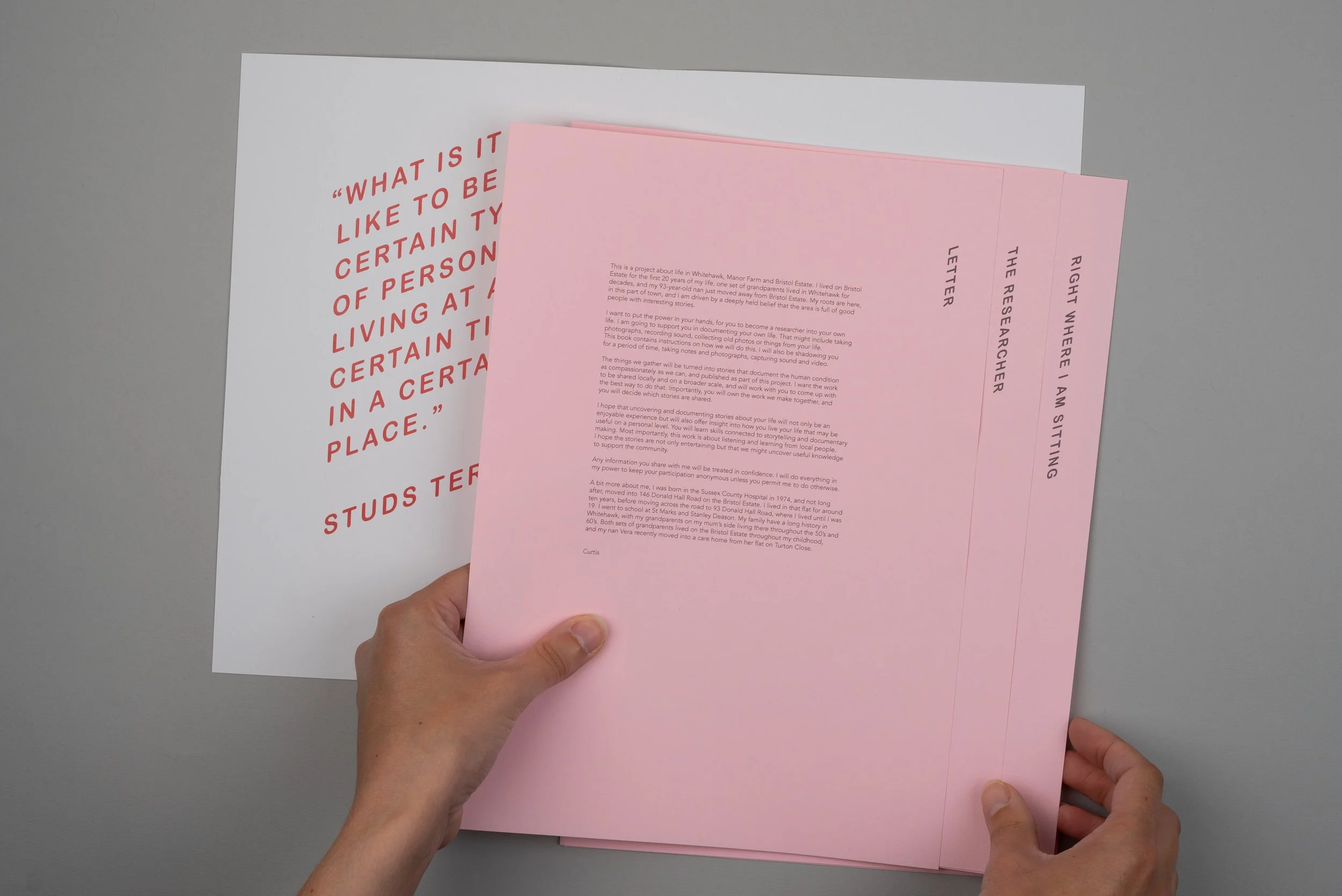
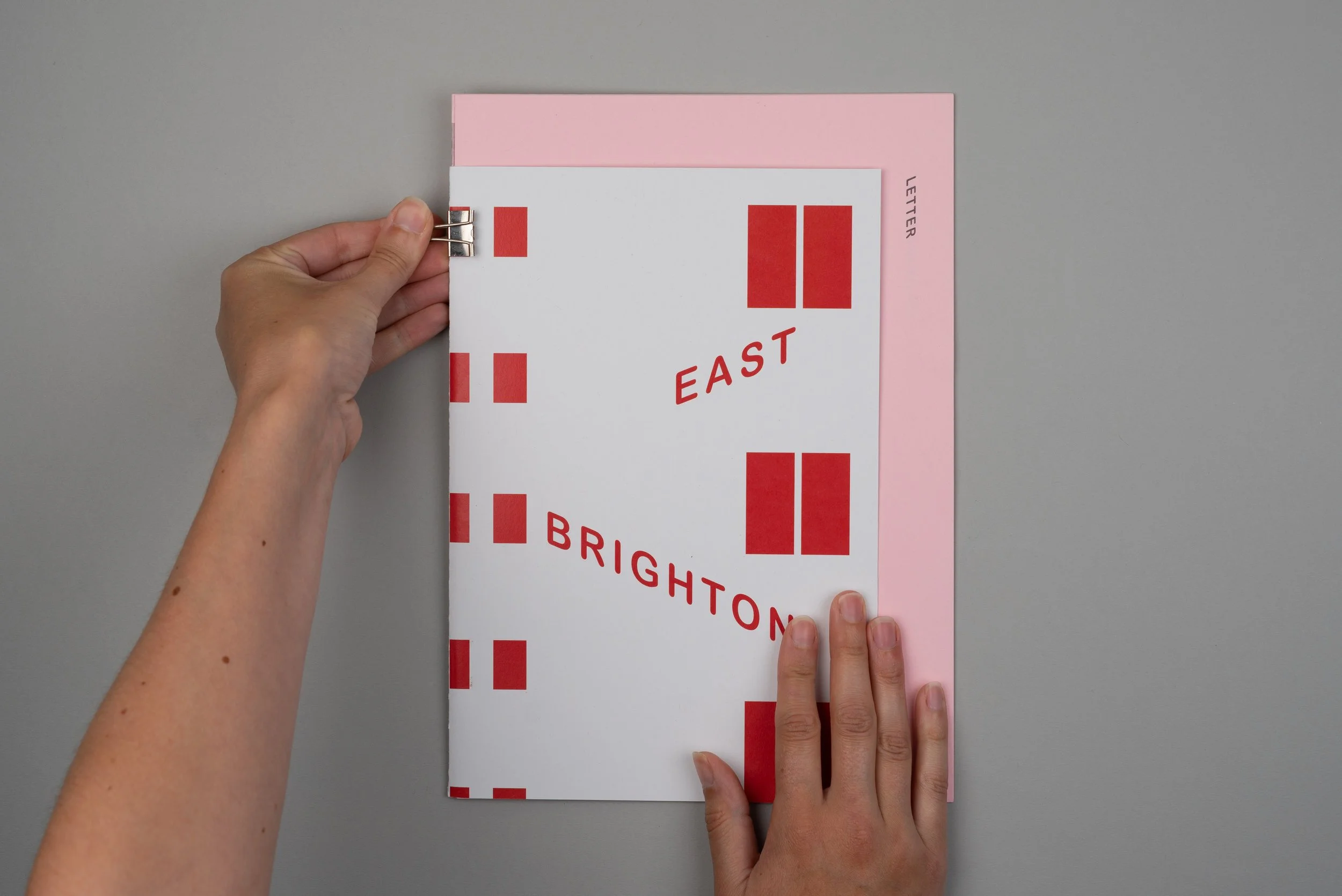
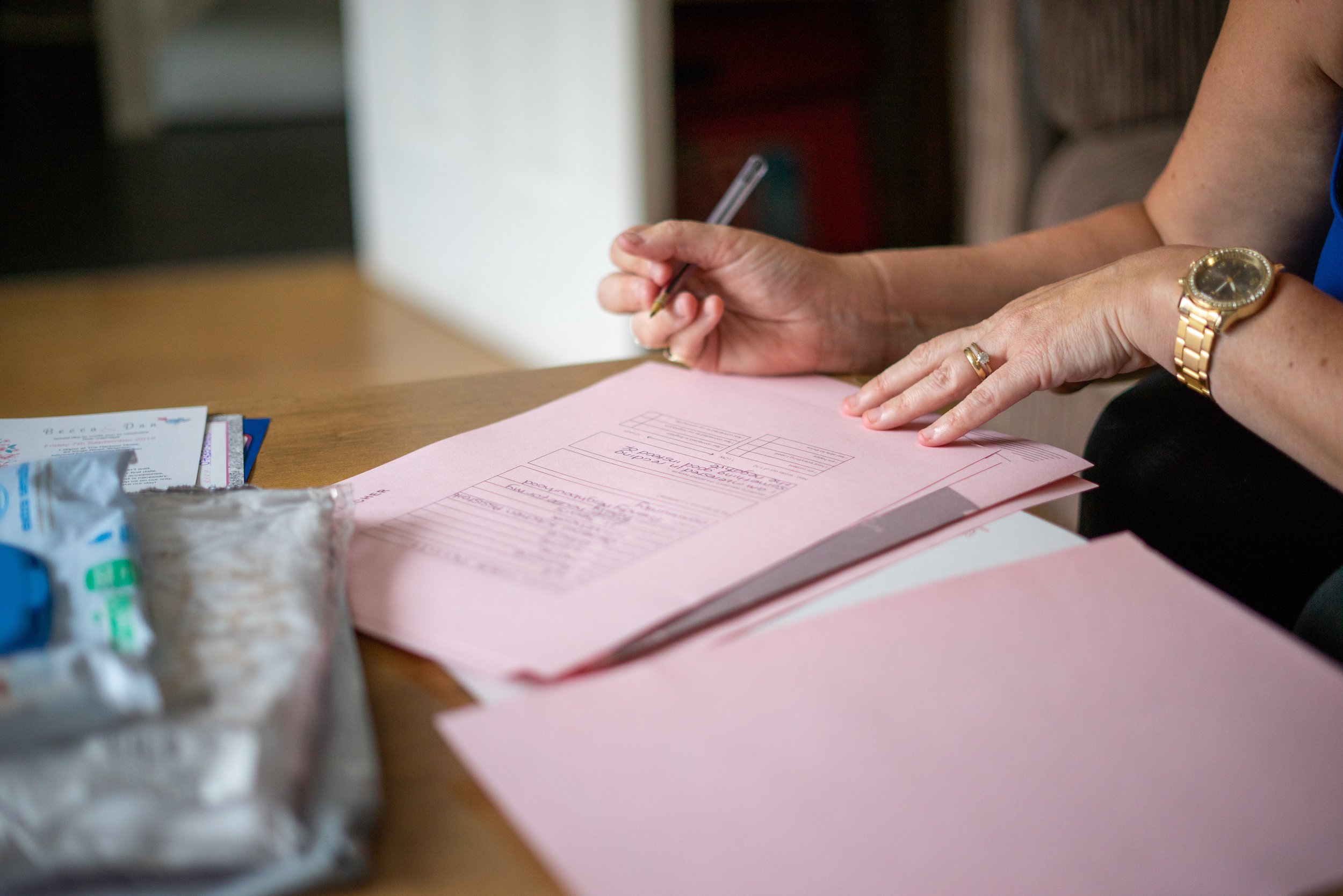
The participant manual
Design: Emily Macaulay
Used by participants to guide them through the process of documenting their lives
The start part 2 - an event and interview
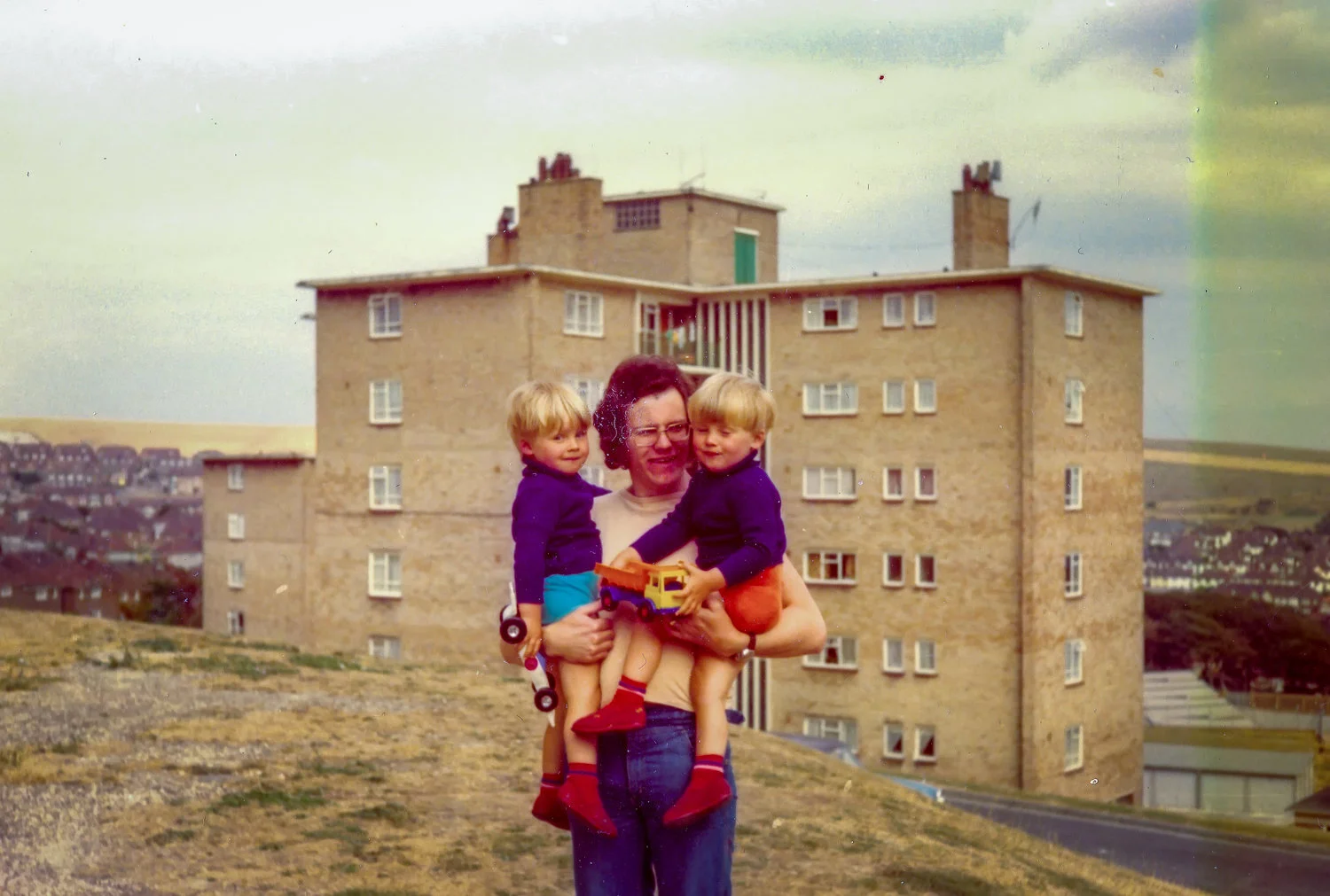
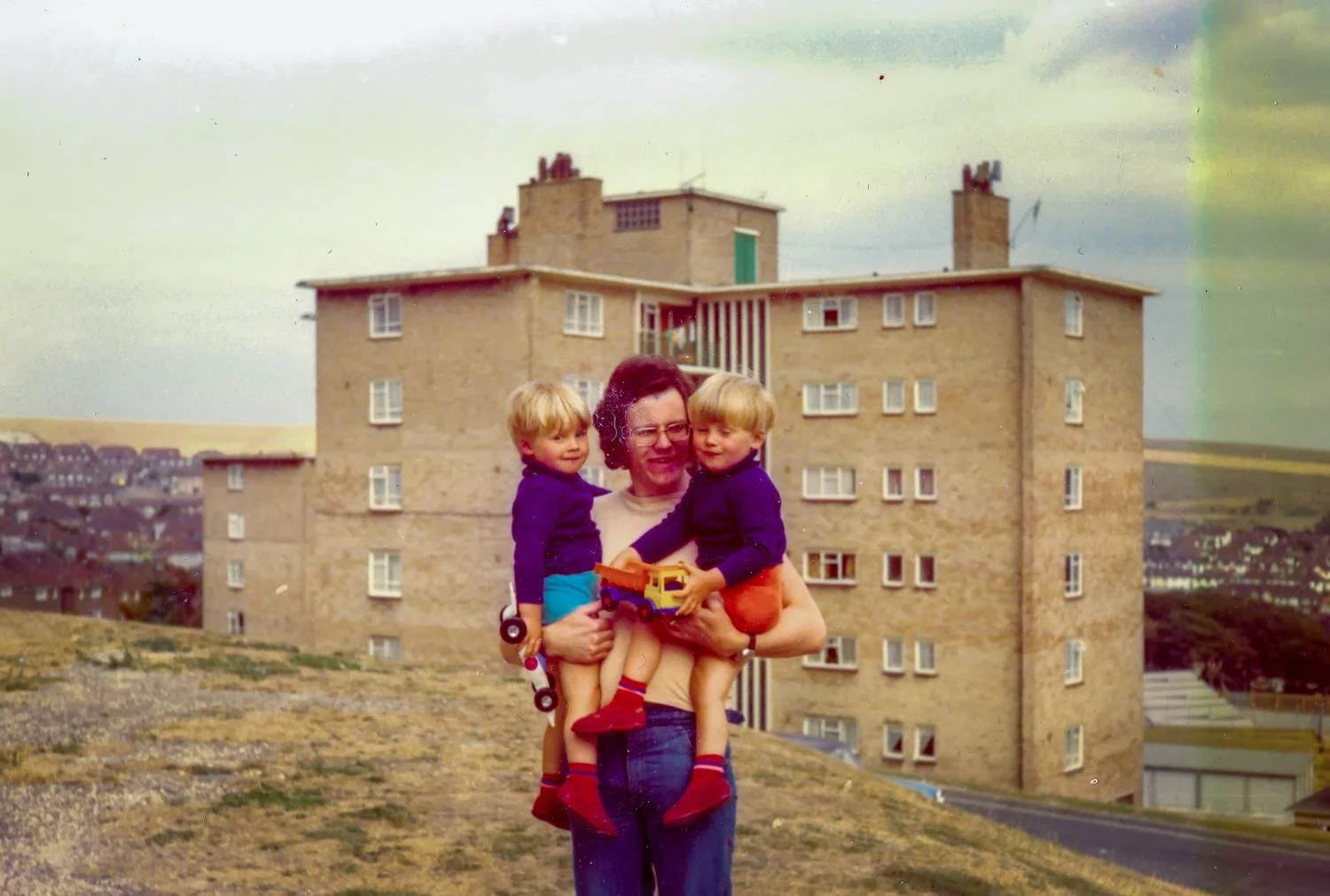
Me, my twin and dad on the Bristol Estate around 1979
I thought it would be a good idea to co-host an evening of talks about using artistic endeavours to effect change. The original idea was to invite a couple of people to speak about projects they had already started or completed. In the end, we had just one speaker, Les Monaghan and me being interviewed by Bryony Good, one of the Miniclick team.
I'm right at the start of this project, so this interview is a bit of a status report and some quite open and fluid thinking about what I'm doing. As I say in the interview, I'm interested in having conversations with people about this work, so if you want to get in touch I'd love to hear from you.
Read the post and listen to the interview here.
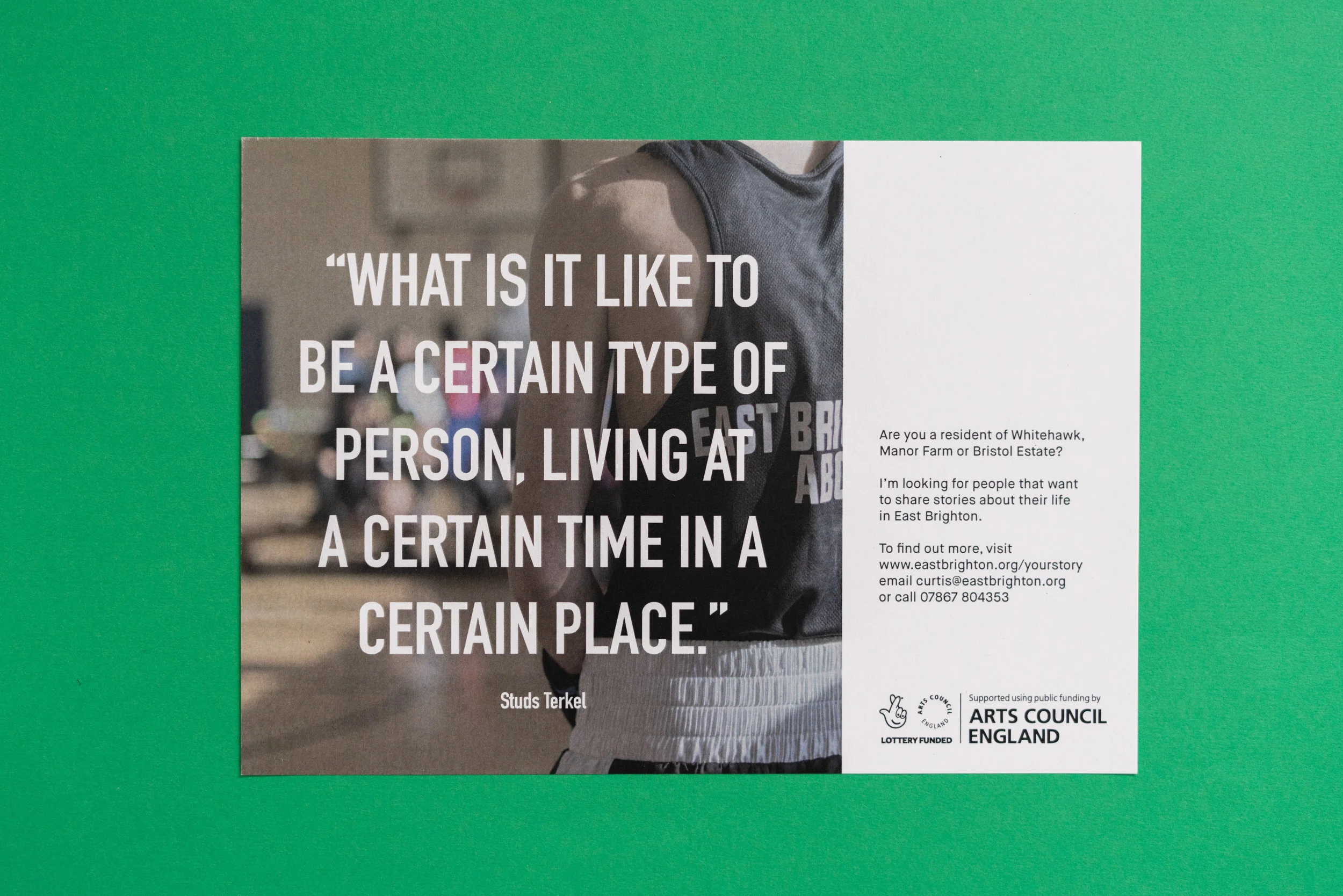
Looking for participants - Flyer
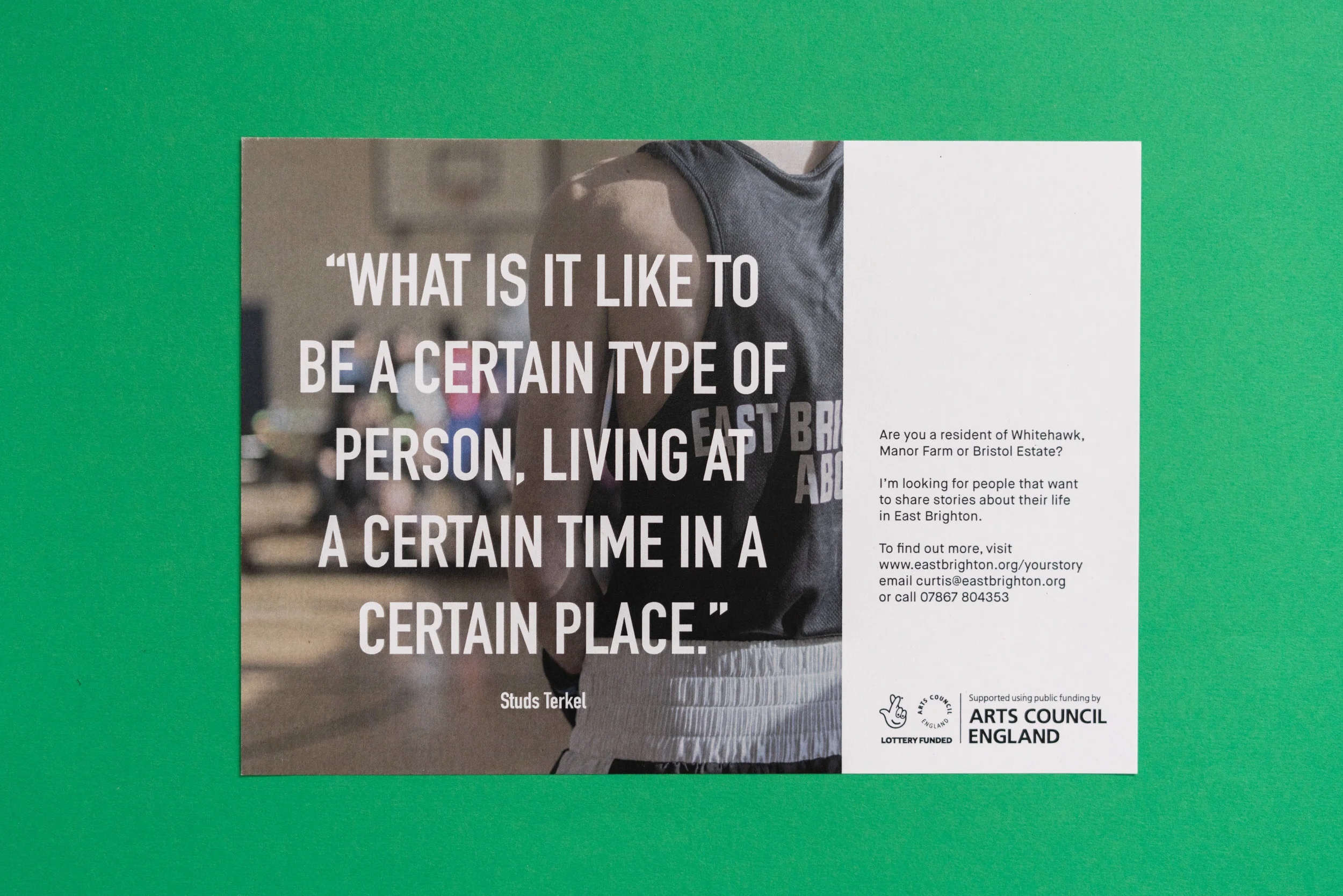
Design: Emily Macaulay
Handed out at events in local community venues across East Brighton.
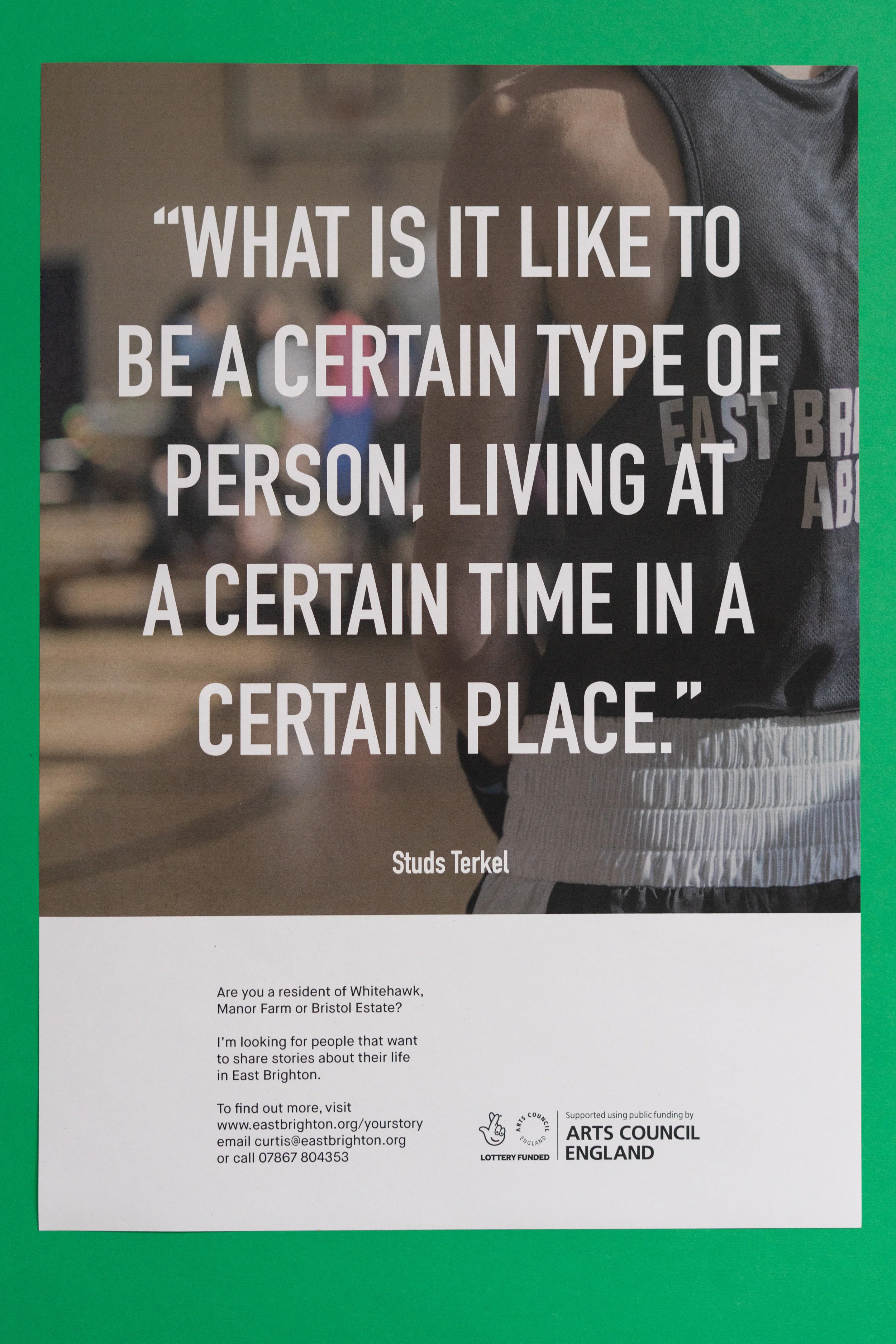
Looking for participants - Promo Poster
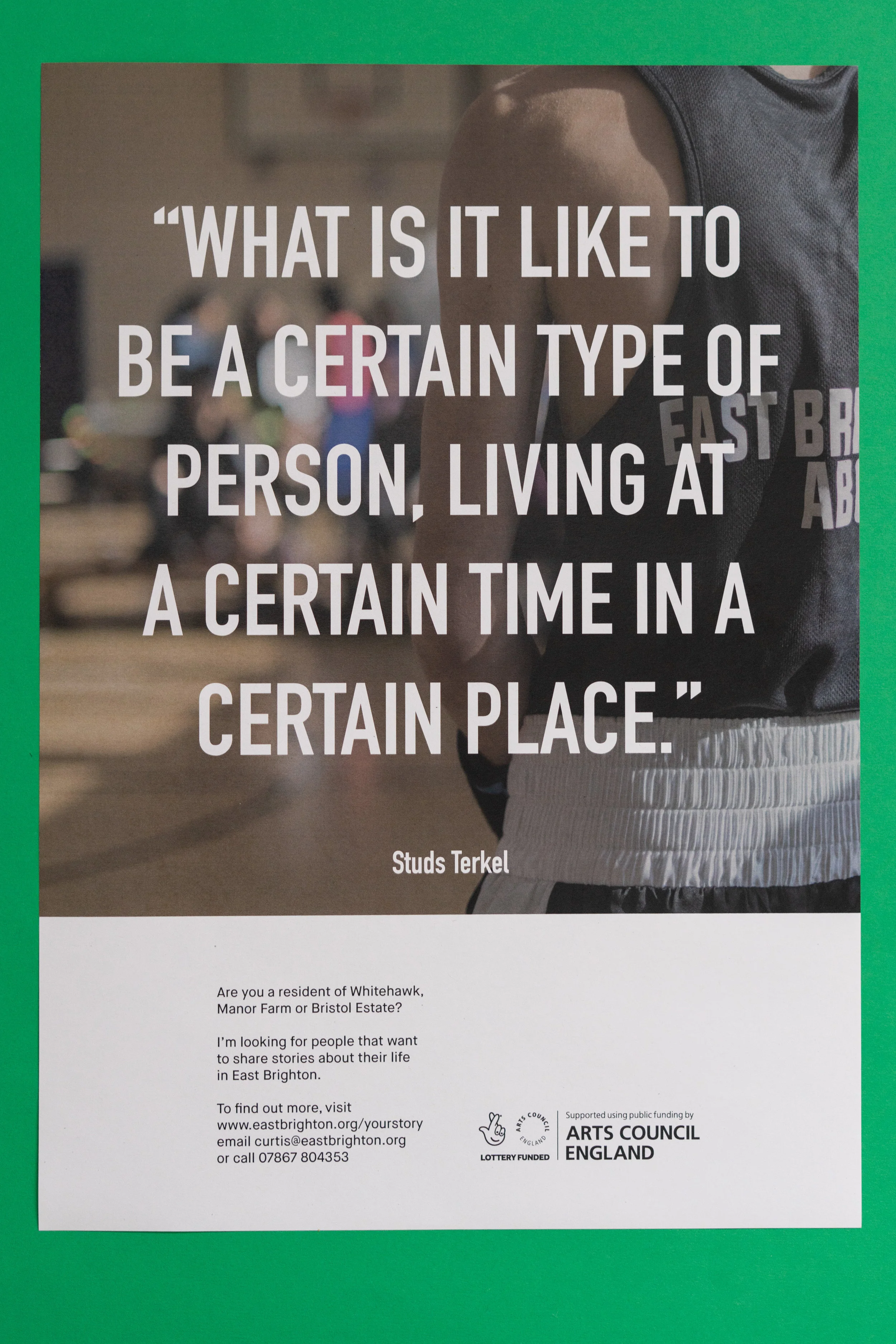
Design: Emily Macaulay
Posted on buses running through East Brighton and in local community venues across East Brighton.