Beyond the Talking Head: How We Captured the Human Heart of Leadership
The most effective learning happens when we connect on a human level. But how do you capture something as complex and personal as leadership in a way that feels truly real?
When Fieldwork was commissioned by The King's Fund to create a series of films for their new ShiftWorks course on clinical leadership, this was the central question. To teach a subject that is so deeply human and situational, we knew we needed to create an experience that went beyond a simple presentation of facts and instead captured the lived reality of the role.
The answer was to slow down.
The Challenge: Showing the Unseen Tension
Clinical leadership isn't a simple checklist of tasks; it’s a practice shaped by an "inherent tension that exists leading in the space between the clinical and operational". All clinicians, from doctors and nurses to pharmacists and social workers, have in common a professional accountability for the quality, risk, and safety that comes with patient care.
As Dr. Simon Newitt of The King's Fund explains, theories about leadership "can never capture what it's like to walk in someone's shoes and try to manage that responsibility". This is why, he notes, finding ways to bring the "everyday, lived and felt reality of clinical leadership was essential for the credibility of the lessons in the course". Our job was to capture that reality.
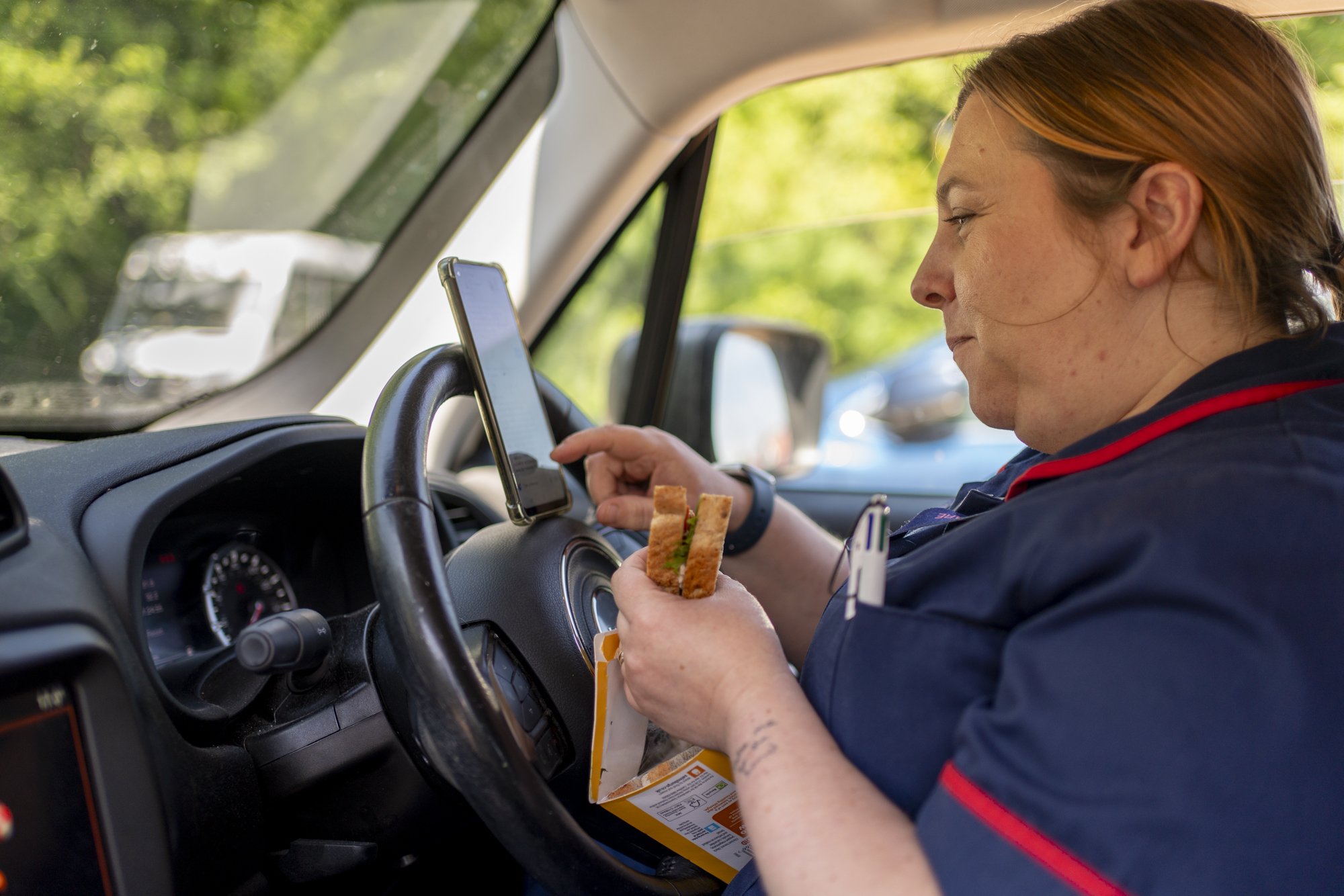
Becky dancing between worlds
In one of the settings, I shadowed Becky, Clinical Lead in the Community Palliative Care Team at Dorothy House Hospice Care, in Bradford-on-Avon, whose day is a constant act of "dancing between the two" worlds from emotionally heavy palliative care meetings to urgent staff phone calls. Capturing this complex, human reality required an approach rooted in observation and patience.
The Process: The Power of Patient Observation
To get to the heart of these stories, I spent a full day with each of the three clinical leaders, simply observing and photographing. This allowed me to go into our interviews with questions informed by real, lived moments, not a generic script.
My process is built on this principle: observation first. It’s a slower, more patient way of working, but that slowness pays off. It allows for trust to build and for the authentic story to emerge. For this project, we captured the soundscapes of the environments, the sights and sounds of the workplace to create a narrative that feels both immersive and deeply personal.
I'll give the final word on the process to Simon:
“There’s something about the atmosphere of work... that really brings the person behind the job title, and the challenge of leadership, to life. It’s humanising, and that in the end was an important goal. Only ethnography can do that in my opinion.”
The Impact: Leadership is Personal
So what does this "slower" approach achieve for the learner? The hope, as Simon puts it, is that clinicians will "see parts of their work and experience reflected back at them" and ultimately feel "seen and validated".
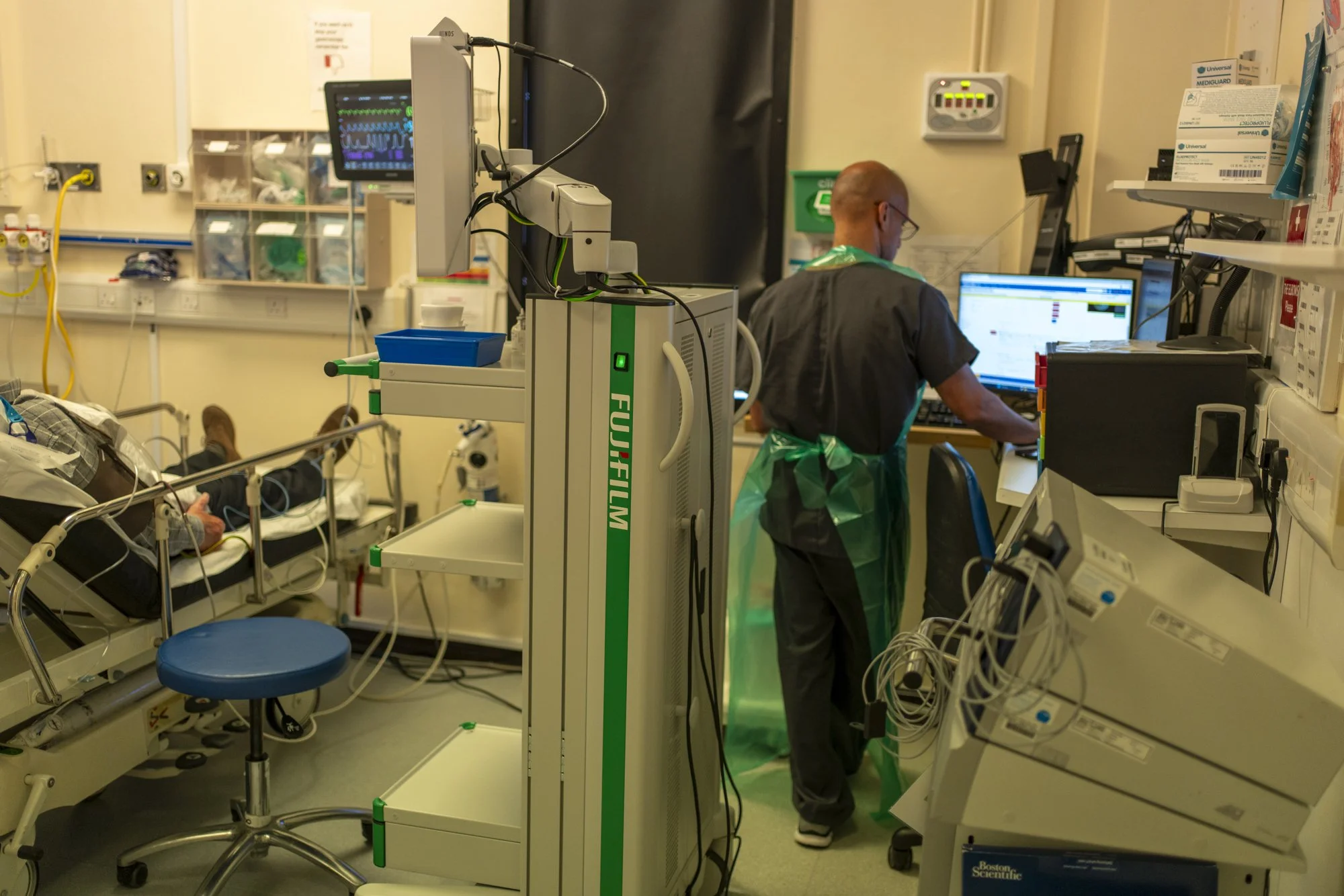
Robin preparing for a bronchoscopy
This sense of validation is crucial. In one film, Robin, Hospital Director and Respiratory Consultant at Prince PhiIip Hospital, Llanelli, frankly states that medical training in the UK "doesn't really set you up to be a leader".
In another, Vicky, Clinical Lead in Respiratory and Transplant Medicine at Royal Brompton and Harefield Hospitals, London, speaks to the challenges of identity, noting she doesn't "quite fit the image that people have of senior leadership".
By showing these unfiltered realities the feeling of being unprepared, the sting of prejudice the films give viewers something invaluable: permission to be human. They prove Vicky’s point that real leadership isn't about having "a label on the door"; it's about finding a way to bring people together.
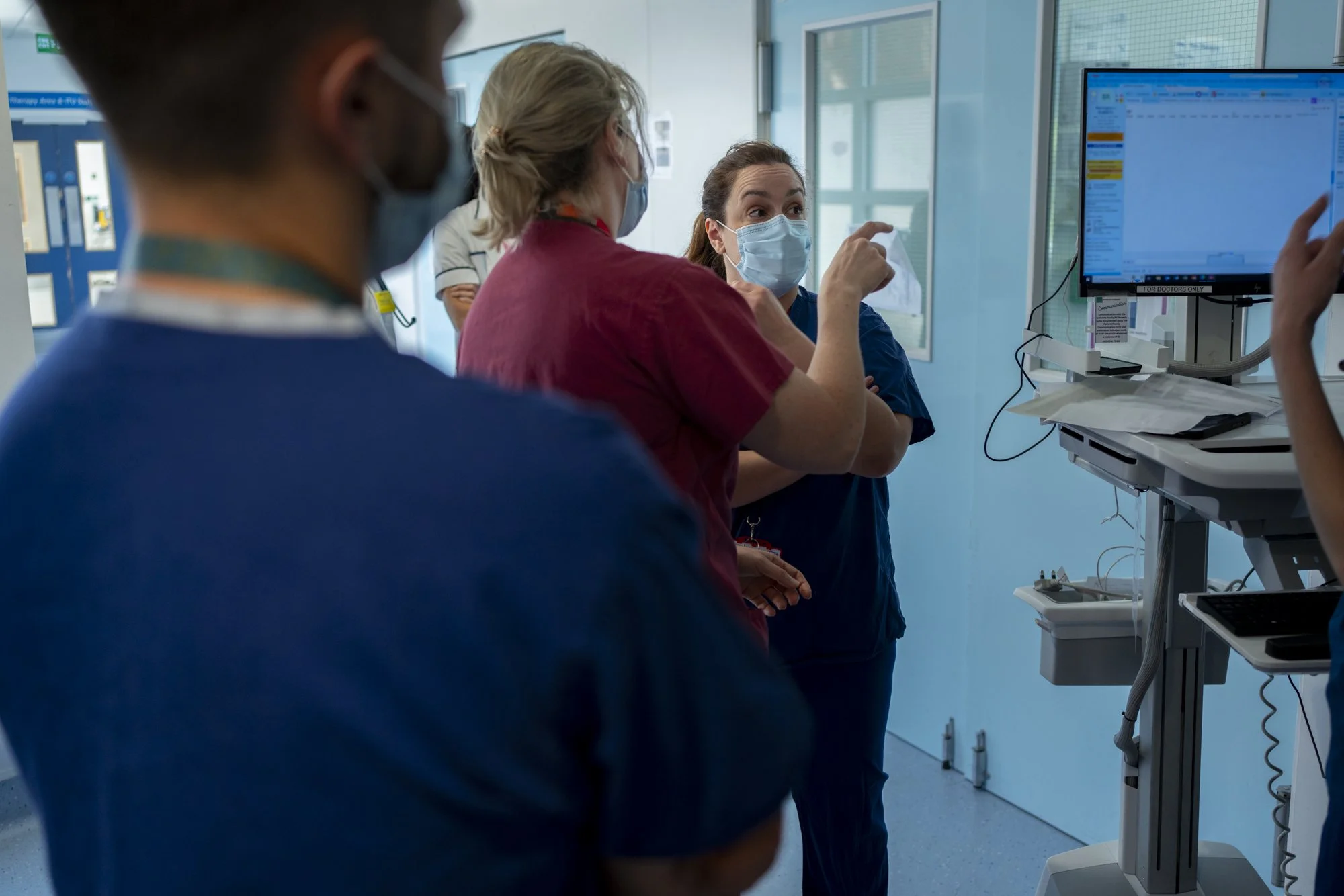
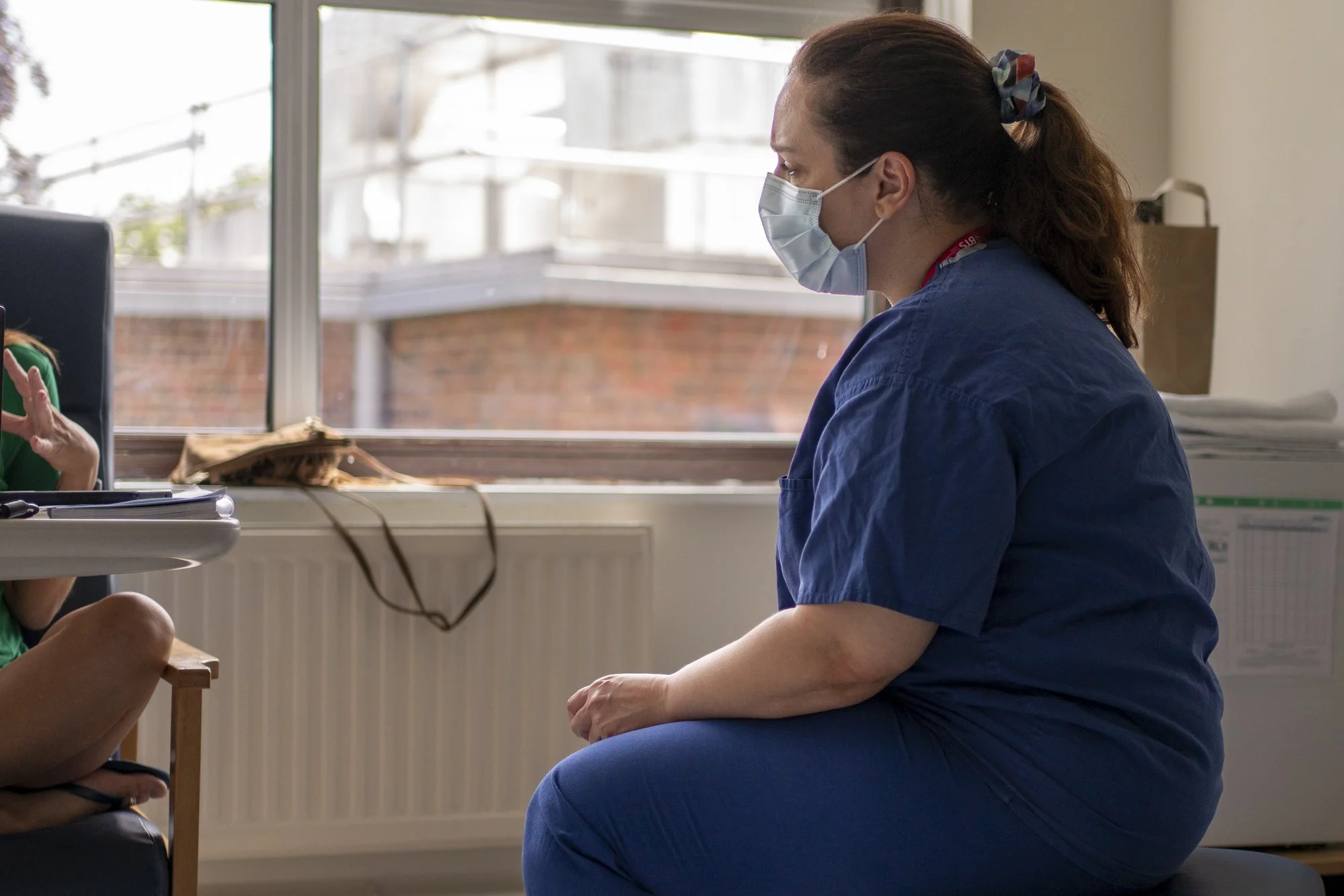
Vicky in an intensive care ward review
A Universal Approach to Authentic Storytelling
While this project was set in the world of healthcare, the principle is universal. Any organisation trying to teach complex, human-centric skills faces the challenge of bridging the gap between theory and reality. The stakes are high. As Simon notes, the mission is to "nurture a new generation of clinicians into leadership roles who are able to make something better" from a system in crisis.
If your goal is to tell a story that resonates, share a message that inspires, and create an experience that feels truly authentic, perhaps it’s time to embrace a more patient and observant form of storytelling.
The films themselves can't be shared publicly, but I would be delighted to show them to you. Book a private call with me, and I can take you through the work and discuss how this approach could bring your own stories to life.