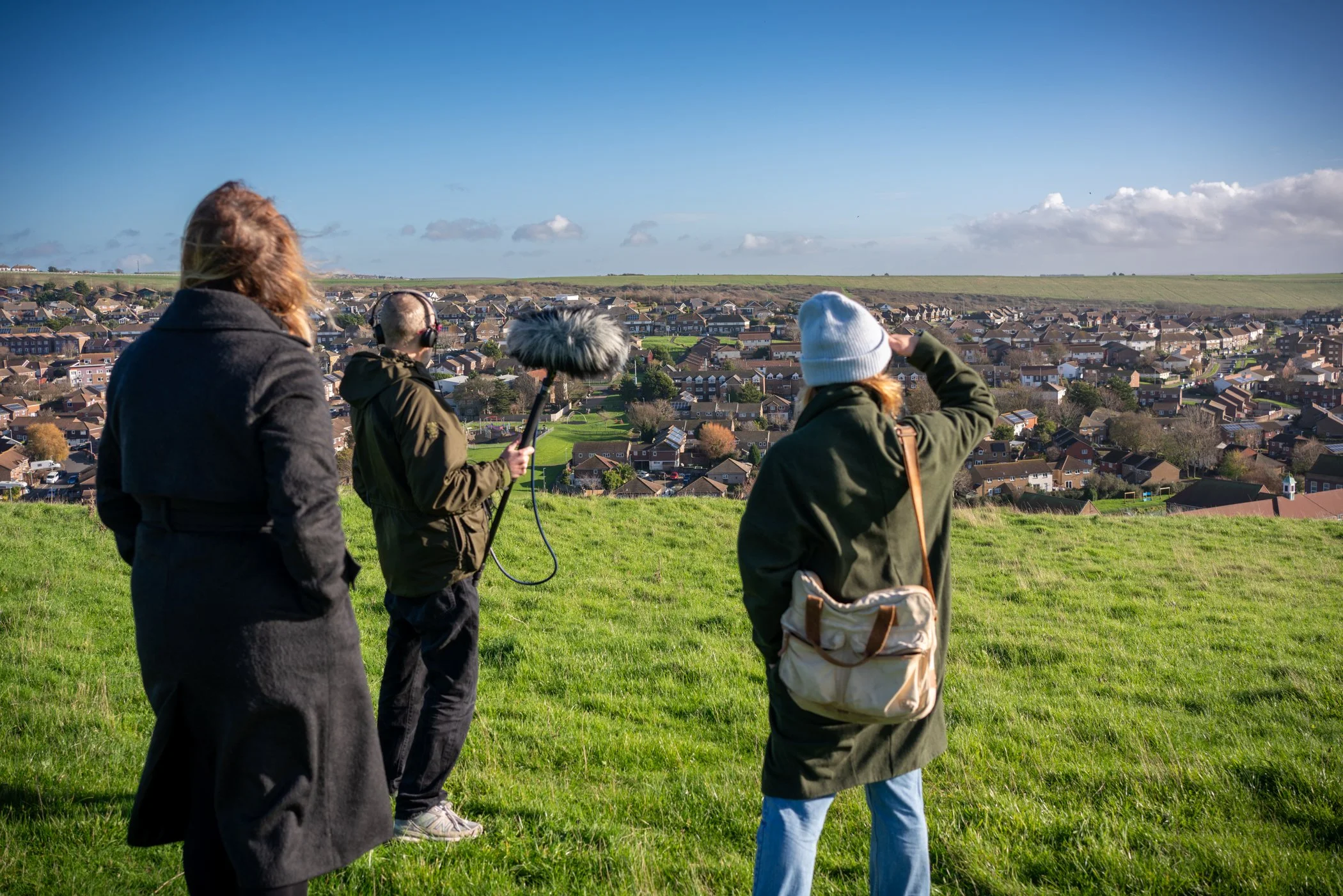
Simon, Eve and Carlie recording overlooking Whitehawk
When I first wrote about the Class Divide podcast back in 2022, it was a deeply personal reflection. The project was about the place I grew up in, my own school experience, and the importance of telling stories from within working-class communities.
It was also about change. Not just awareness-raising, but changing hearts and minds so that policy itself changes.
Two years on, that change is no longer a hope, it’s happening.
Building a story from the inside
From the beginning, the series was grounded in lived experience. Most of the people working on it came from council estates or working-class backgrounds, including me. That shaped every decision, from whose voices we featured to how we handled consent. Every participant had the right to veto their story.
We followed one local family’s education journey, weaving it through expert interviews, data, and community voices. The result was a slow, deliberate piece of documentary work that revealed the human reality behind one of the UK’s most stubborn inequalities: the education gap in places like East Brighton’s Whitehawk, Manor Farm, and Bristol estates.
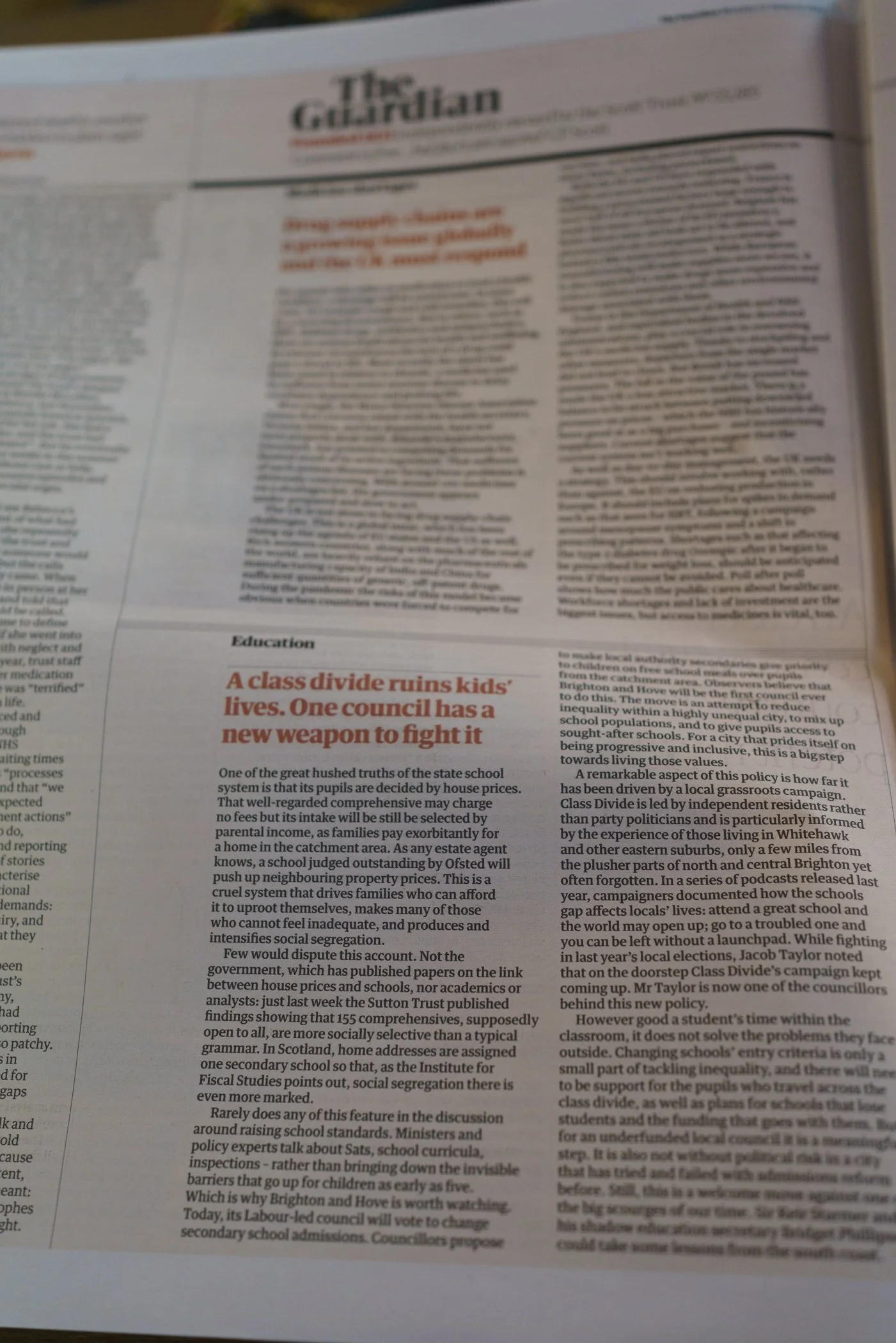
Guardian Editorial about policy changes in Brighton
From being ignored to shaping policy
When we started, the Class Divide campaign was largely shut out of education policy conversations. Councillors and officers rarely engaged.
Today, some of those same decision-makers meet with the group regularly. Councillors have put forward school admissions policy changes directly influenced by the podcast and wider campaign, including fairer catchment boundaries and expanded free school travel. These changes were voted through and are now being discussed beyond Brighton, with national policy stakeholders.
This shift didn’t happen overnight. It’s the product of trust, persistence, and telling a story that could not be ignored, told in a way that policymakers, educators, and the public could connect with emotionally and intellectually.
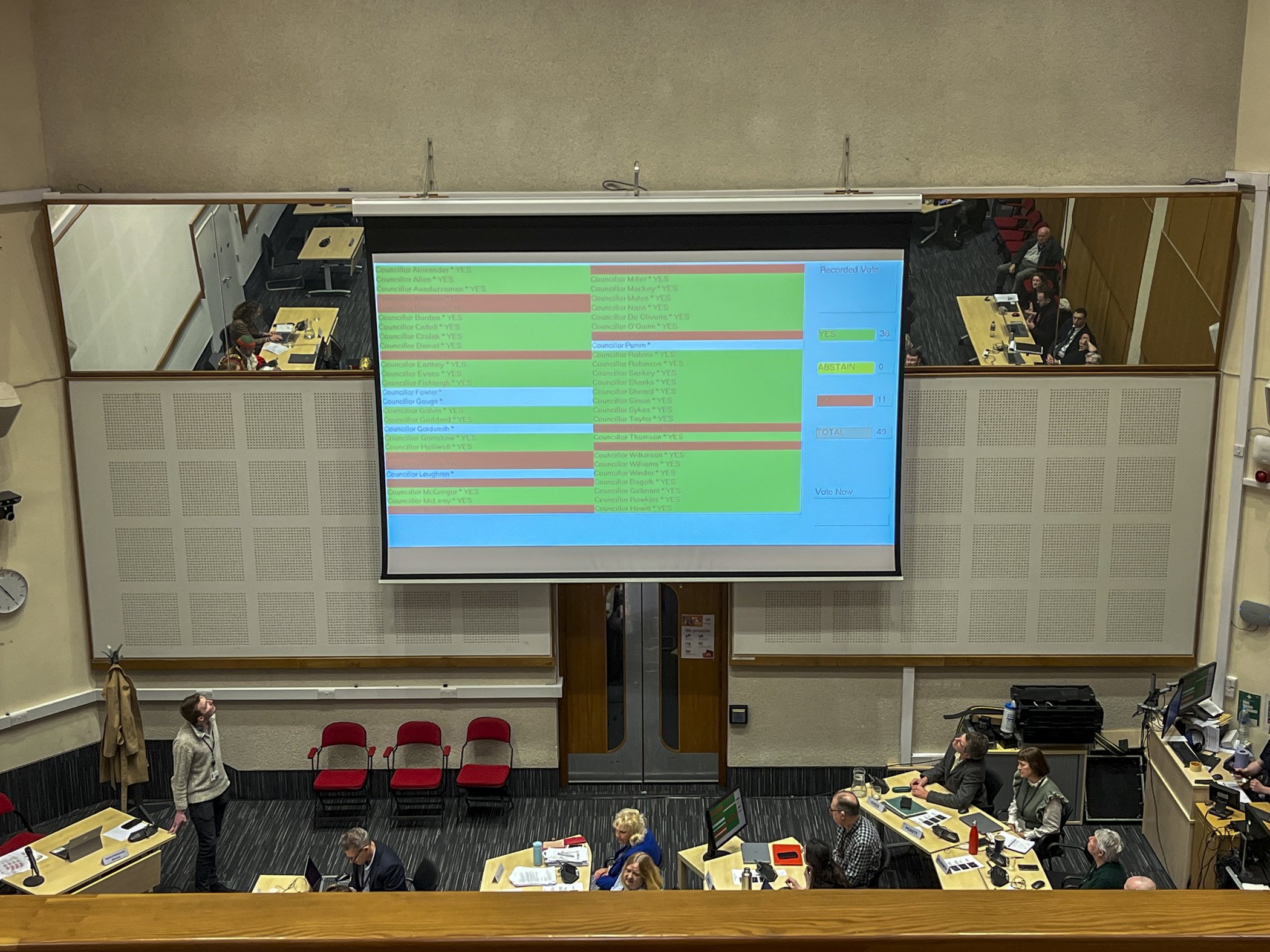
The moment the 2025 policy changes were voted through
Why this matters for others
If you’re working on issues where the people most affected are rarely heard, Class Divide is a proof of concept:
Slow, ethical, embedded storytelling works.
When you put lived experience at the centre, you don’t just get a powerful narrative, you get influence.
The right story, told the right way, can move people from listening to acting.
For organisations, campaigns, or public bodies trying to shift thinking and policy, this is the model.
A few years ago, I wrote that Fieldwork’s mission was “to help people notice things that inspire change, amplify good, and enable amazing things to happen.”
The Class Divide podcast remains one of the clearest examples of that mission in action.